
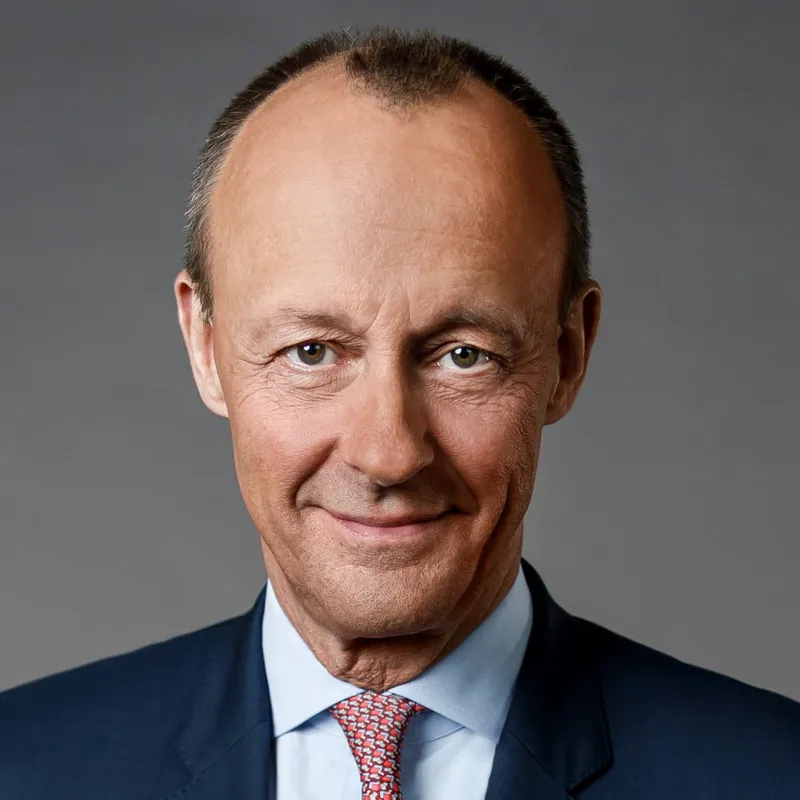
Chancellor Friedrich Merz departed on Monday for Singapore, Japan and South Korea, while President Frank-Walter Steinmeier left for a four-day state visit to China, in separate trips the German government says are not directly connected.
German Chancellor Friedrich Merz and President Frank-Walter Steinmeier set off on separate trips to Asia on Monday, each seeking stronger economic and diplomatic ties across the region. Merz left for his longest overseas trip since taking office, while Steinmeier departed in the morning for his second state visit to China.
Merz is travelling with a large, high-level business delegation to Singapore, Japan and South Korea, and is due back in Berlin late on Friday. In Singapore he is scheduled to hold political talks and deliver a major foreign policy speech, before travelling to Japan, a close German partner in the Group of Seven and the Group of 20. In South Korea he will attend the German business community's Asia-Pacific Conference and visit the demilitarised zone separating North and South Korea.
Steinmeier's four-day state visit to China is aimed at pressing for fairer economic and trade relations, according to the president's office, which said existing imbalances must be addressed. He is expected to give a keynote speech at Peking University on Thursday before holding talks with President Xi Jinping and Premier Li Qiang on Friday.
Government sources stressed that the two trips, involving very different partners, were not directly connected, and the DW account presents them as parallel rather than joint missions. Merz visited China in February and is now seeking to diversify Germany's partnerships across Asia to reduce dependence on individual countries, while Steinmeier believes Beijing's growing global role must come with greater international responsibility, including using its ties with Moscow to push for an end to Russia's war against Ukraine.
The week will test whether Germany can deepen ties with both China and China's regional neighbours at the same time. Merz has said the European Union must be ready to defend its industry against unfair Chinese trade practices, while also seeking fair trade, and the Seoul business conference starting on 29 October will show how far German and Korean firms turn shared concerns about supply chains and protectionism into deals.