
The US Commerce Department is finalising rules that would stop Chinese AI companies from renting advanced Nvidia chips through data centres in seven other countries, closing a loophole in existing export controls.
The US Commerce Department is preparing to finalise rules that would stop Chinese artificial intelligence companies from renting advanced chips through data centres outside China, The Information reported. The rules would extend existing semiconductor export controls to seven additional countries, including Singapore, Malaysia and Thailand, and could be announced this month.
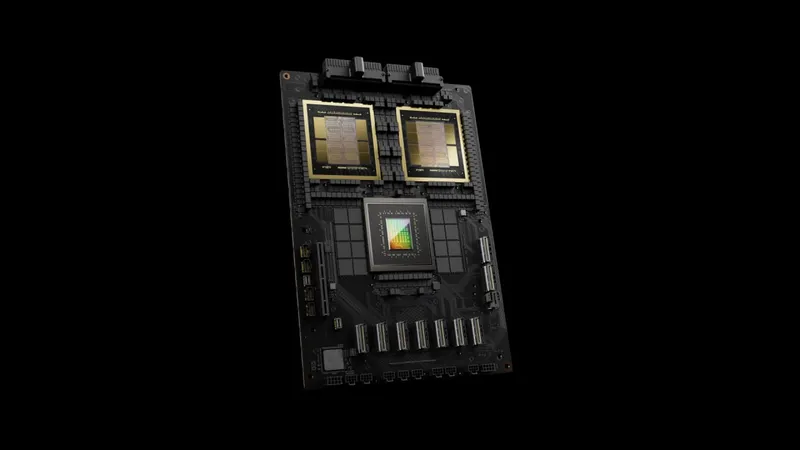
The gap the rules target is remote access. Current controls ban direct exports of advanced AI chips to China, but Chinese companies can still run workloads on the same hardware by renting computing power from data centres abroad. Under the reported plan, companies wanting to sell Blackwell-class chips and later models into the seven countries would first need a US licence, and applicants would have to disclose the final recipients and their actual use, with verification afterwards. The countries named in reporting are Singapore, Malaysia, Thailand, Indonesia, Brazil, Norway and South Africa.
Data centres run by American companies would have an exemption, provided they can show they have blocked remote use by China, Russia, Venezuela and other countries under US arms embargoes, and provided they report their customers and the scale of computing they use. The legal basis is contested: a lawyer at Baker McKenzie told The Information that the Commerce Department lacked statutory authority under current law to regulate remote computing access. Congress has a cleaner route, the House passed the Remote Access Security Act in January by 369 votes to 22, but the Senate has not taken it up.
The Information's reporting, carried by several outlets, rests on people familiar with the matter, and the rules have not been formally announced; one account says they are still in interagency consultation, so the final list of countries and the details could change. The House vote and the Senate's inaction are matters of public record, as is the May 2026 licensing guidance that already requires China-headquartered firms to obtain licences for Blackwell and H200 chips even when the hardware sits outside China. The claim that Tencent, Alibaba and ByteDance have used overseas data centres is reported, not established by the companies.
The measure would reach deep into the AI supply chain. Tencent, whose third-quarter results are due on November 18, is one of the companies whose AI spending the rules would complicate, and the seven countries include the Southeast Asian hubs where much of the region's data-centre capacity sits. For the chipmakers, the question is whether licensing slows sales; for Washington, it is whether a rule written without clear statutory authority survives contact with the courts and with allies whose data-centre industries would bear the paperwork.
The next step is the announcement itself, expected this month. Its exact scope, which countries, which chips, and how the American-company exemption works, will show whether this is a targeted closure of a loophole or a broader redrawing of who can buy advanced computing, and from where.