

Magnetic microbots dissolve blood clots six times faster in lab tests
ETH Zurich researchers have developed magnetic microbots that dissolved blood clots six times faster than medication alone in lab tests, and doubled restored blood flow in live pigs.
Story So Far
Researchers at ETH Zurich have built tiny magnetic robots that dissolve blood clots six times faster than medication alone, in laboratory tests that could one day change how strokes and heart attacks are treated.
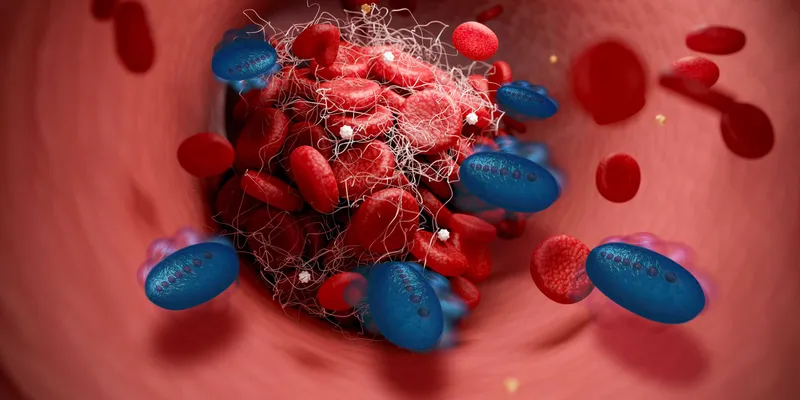
The microbots are made from a biocompatible gel containing magnetic iron-oxide nanoparticles, shaped like tiny cocoons about eight micrometres long, roughly the size of a red blood cell. Delivered by catheter to the clot, they are set spinning by a magnetic field generated outside the body, tumbling along the vessel wall like a gymnast doing handsprings and dragging the clot-dissolving drug with them.
In a silicon model of a blood vessel, using clots made from pig's blood, the drug dissolved the clot six times faster with the microbots than without them. In live pigs, whose arteries were blocked with a clot, the area of vessel with restored blood flow after 30 minutes was twice as large with the microbots as with medication alone. The work was led by Simone Schürle, professor of medical microsystems at ETH Zurich, with scientists from Charité University Hospital in Berlin.
The results come from ETH Zurich itself, published on Monday, and the numbers are the university's own: six times faster in the lab model, twice the restored-flow area in pigs after half an hour. The limits are stated plainly in the same report. The microbots have not been used in human patients, the paper is still undergoing peer review, and the team says further safety tests in animals, and tests in specific models such as heart-attack models, must come before any approval. A patent application has been filed and the invention has been nominated for ETH's Spark Award.
A clot that blocks a vessel can starve the brain, the heart or the lungs, and the drugs that dissolve it often cannot reach it because the clot itself blocks the flow. If the microbots work in people as they did in pigs, they would attack exactly that problem, carrying the drug to the clot instead of waiting for diffusion. That is still a long way off, and the team's next steps are longer animal safety studies, not a clinic. But the pig results are the first demonstration in a clinically relevant large-animal model that microrobots can make clot-busting drugs work better, which is why the university is patenting the idea now.