

Low-dose triple pill cut repeat stroke risk after brain bleed across kidney function
A post-hoc analysis of the TRIDENT trial, presented at the American Heart Association's Scientific Sessions 2026, found the low-dose triple pill GMRx2 reduced recurrent stroke risk irrespective of kidney function in people with prior intracerebral haemorrhage, with serious adverse events balanced overall and numerically lower with GMRx2 at the lowest kidney function.
Story So Far
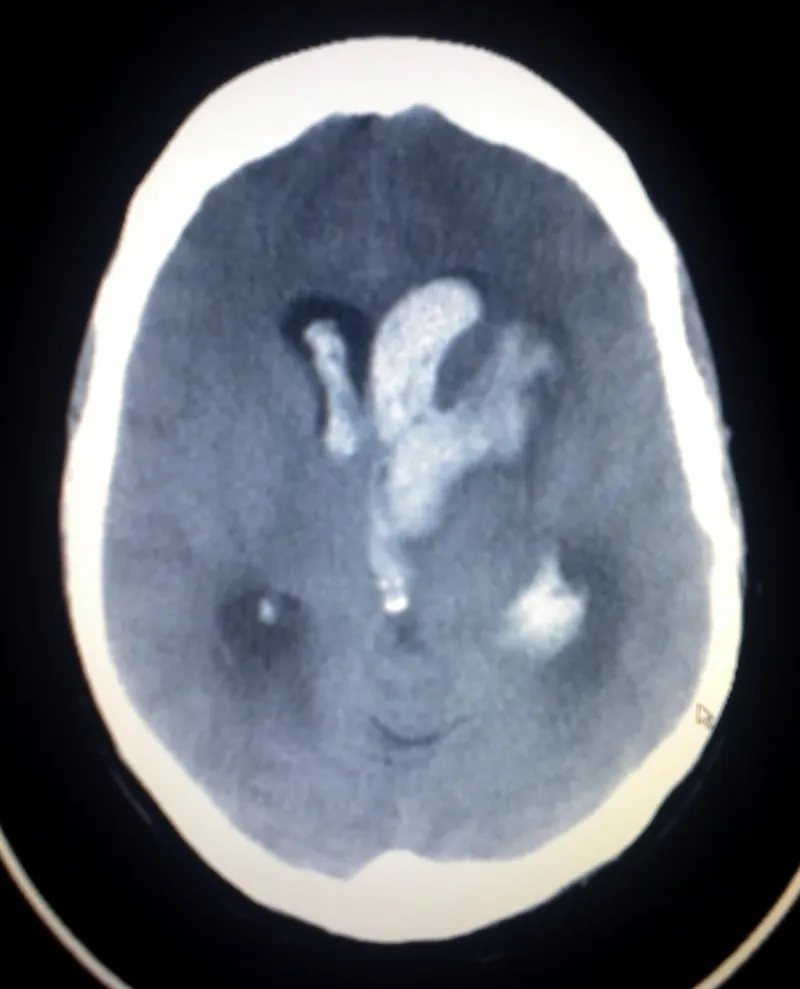
People who survive a bleed inside the brain live with the fear of a second one, and blood pressure is the lever doctors can pull. A once-daily pill that packs three low-dose blood-pressure drugs into one tablet cut the risk of another stroke by about two-fifths in a global trial, and a new analysis says that protection did not depend on how well the kidneys were working.
The TRIDENT trial enrolled 1,670 adults who had previously had an intracerebral haemorrhage and whose systolic blood pressure sat between 130 and 160 mmHg. Half received GMRx2, telmisartan 20 mg, amlodipine 2.5 mg and indapamide 1.25 mg in a single pill, and half a matching placebo, both on top of usual care. Overall, the pill lowered the risk of a recurrent stroke, with a hazard ratio of 0.61, and brought mean systolic pressure down by 9 mmHg.
When the researchers split the results by kidney function, measured as eGFR, the effect stayed consistent: hazard ratios of 0.83 below 60, 0.44 between 60 and 89, and 0.87 at 90 or above, with no statistical sign that kidney function changed the benefit. Absolute risk ran higher where kidneys were weaker. In the placebo group, recurrent stroke struck 11% of those with eGFR below 60 and 10% of those between 60 and 89, against 4% at 90 or above, compared with 8%, 5% and 3% on GMRx2. Serious adverse events were similar overall, 23.8% with the pill against 26.9% with placebo, and at the lowest kidney function they were numerically lower on GMRx2, 26.4% against 42.7%.
The headline result is not new: the main TRIDENT findings were published in the New England Journal of Medicine in April, with the same hazard ratio of 0.61 and the same 1,670 participants. The kidney-function breakdown is the new part, presented as a moderated digital poster at the American Heart Association's meeting in Chicago, and it comes from the company behind the pill, George Medicines. No independent write-up of the new breakdown had appeared when checked, and the analysis looks back at existing trial data rather than testing a fresh hypothesis, so its subgroup numbers carry the usual caveats of a post-hoc read.
The post-hoc read does not change the main trial result, but it gives doctors the first kidney-by-kidney breakdown of a regimen already shown to cut repeat strokes. George Medicines' chief executive, Mark Mallon, said the consistency of the effect was encouraging precisely because kidney disease is tied to a higher risk of another stroke.
TRIDENT finished in 2025. It was led by The George Institute for Global Health and funded by Australia's National Health and Medical Research Council and the Brazilian Ministry of Health, with study medication supplied by George Medicines. The analysis offers reassurance for a group doctors have had little specific evidence for, but it does not by itself change prescribing: the pill's place in guidelines will rest on the full trial record, not a subgroup slice.
Keywords
- TRIDENT
- GMRx2
- intracerebral haemorrhage
- recurrent stroke
- kidney function
- eGFR
- telmisartan
- amlodipine
- indapamide
- George Medicines
- AHA Scientific Sessions 2026
Tags
Source
Post-hoc kidney-function analysis of a NEJM-published trial; relevant to stroke survivors with chronic kidney disease, a group with little specific evidence