

Delhi chokes on severe smog the morning after Diwali as air quality crosses 400 at multiple stations
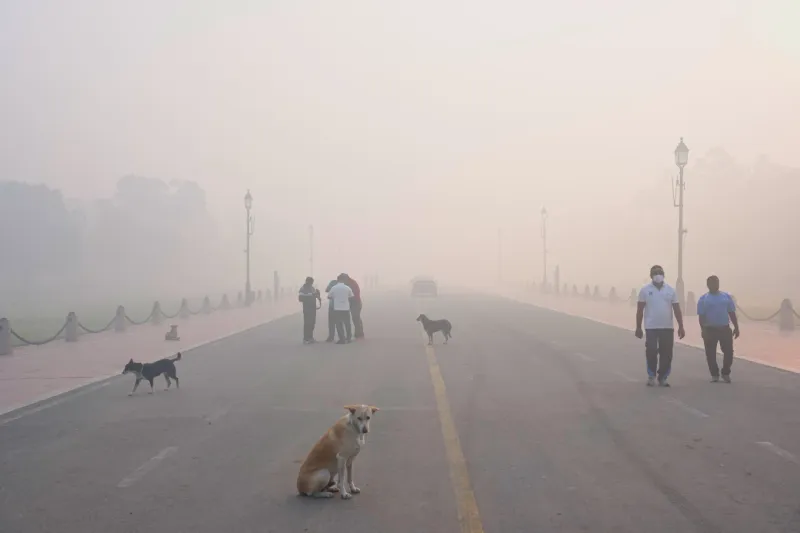
Thick smog blanketed New Delhi on Monday after Diwali firecrackers, with the citywide air quality index at 370 in the morning and several monitoring stations recording readings above 400, in the severe band.
Story So Far
A thick blanket of smog shrouded New Delhi on Monday, the morning after Diwali, as firecrackers lit up the capital on Sunday evening and left the air at hazardous levels. The city's air quality index stood at 370 at 9am, in the very poor band, and several monitoring stations recorded readings above 400, which the Central Pollution Control Board classes as severe.
The worst readings came from stations across the north and east of the city. Burari Crossing registered 441, Delhi Technological University recorded 439 at 10am, and Sonia Vihar reached 449, the highest reported during the morning. Ghazipur stood at 418 while Akshardham, at 337, was merely very poor. Delhi's average index had already been 376 on Sunday, up from 369 the day before, and visibility fell sharply as a grey haze settled over streets and high-rise buildings.
The timing was expected, and the restrictions did not hold. India's Supreme Court had ruled in October that only certified low-polluting green firecrackers could be used, and only in three-hour windows over the Diwali weekend. The Commission for Air Quality Management had invoked Stage III of its Graded Response Action Plan on Friday, three days before Diwali, bringing stricter vehicle curbs, a halt to construction and hybrid learning for primary school pupils. Firecrackers still went off across the city.
The Associated Press and Reuters both describe the same morning: fireworks on Sunday night, smog on Monday, readings past 400 at multiple stations. The pollution board's own figures, carried by Indian outlets, put the citywide reading at 370 at 9am and station readings in the 430s and 440s. One figure varies by the hour it was taken — the highest station reading reported during the morning was 449 at Sonia Vihar — so the scale of the spike is consistent even where the single highest number differs. What the sources agree on is the cause: firecracker smoke layered onto air that was already hazardous.
Delhi's smog is an annual event, not a one-night accident. The metropolitan region, home to more than 30 million people, is among the world's most polluted in winter, when cooler air, low wind and stagnant conditions trap pollutants. Smoke from crop-residue fires in Punjab and Haryana adds to the load — Punjab has recorded 4,459 farm fires this season, to November 8 — alongside vehicles, industry and construction dust. A New Delhi resident, Isyad, said the smog left his throat irritated and his eyes itching. Shweta Narayan, a public health expert at the Global Climate and Health Alliance, called the government's response so far knee-jerk and temporary.
The Air Quality Early Warning System has forecast that Delhi's air could stay in the severe band for several days from November 9. Environmentalists say the lasting fixes are cleaner energy and stricter controls on vehicle emissions. Until the wind changes, the city's measures — construction limits, diesel generator curbs, court-ordered firecracker rules — will be judged against the same test they fail every year: whether the air clears, or simply returns.
People Sentiments Public Mood: Negative
- New Delhi resident Isyad said the smog left his throat irritated and his eyes itching
- Public health expert Shweta Narayan called the government's response knee-jerk and temporary
- Environmentalists say long-term solutions such as cleaner energy and stricter controls on vehicle emissions are needed