

China's SMEE showcases home-grown lithography systems with over 90% local parts
SMEE exhibited models of its next-generation front-end dry lithography platform at the China International Import Expo in Shanghai, saying the systems are running in mass production at Chinese logic and memory fabs with more than 90% of key components sourced domestically.
Story So Far
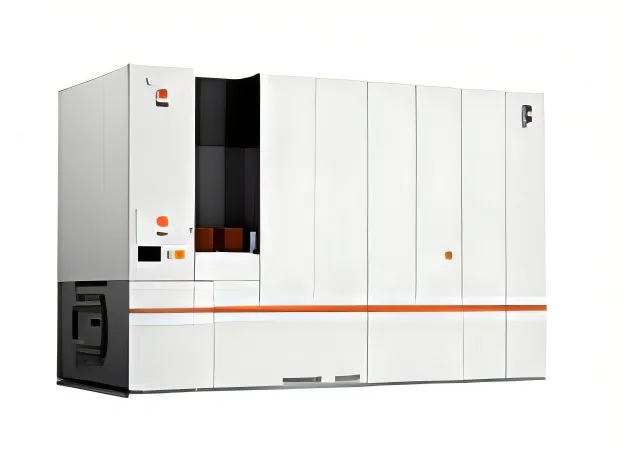
Shanghai Micro Electronics Equipment has put its most advanced lithography hardware on public display, presenting models of two next-generation front-end dry scanning systems at the China International Import Expo in Shanghai. The SSC800 and SSB800, built on the company's own dual wafer-stage platform, are the centrepiece of China's push to make the machines that print chips without foreign suppliers.
The systems cover different ends of mature-node production. The SSC800 KrF line supports processes at 110 nanometres and above, aimed at AI and high-performance computing, DRAM and NAND flash, microprocessors and Micro LED, while the SSB800 I-line line targets 280 nanometres and above for power semiconductors, analogue chips and MEMS. Both use domestically developed high-numerical-aperture projection lenses, and SMEE says more than 90 per cent of their key components are sourced inside China.
SMEE says the machines have moved beyond demonstration. Multiple units are operating at leading Chinese logic and memory fabs, collectively supporting the processing of more than 10 million wafers with equipment availability above 92 per cent, according to trade-press reports of the company's claims. SMEE describes itself as the only company in China able to deliver mass-produced front-end dry lithography systems on a stable basis.
The claims behind the display have not been independently verified, and the limits of the achievement are visible in the same reporting. The systems are dry lithography for mature nodes, not the immersion deep-ultraviolet or extreme-ultraviolet tools that define the leading edge, and the imaging performance is described as comparable to international products in the same category rather than ahead of them. Separately, Reuters has reported that state-owned Shanghai Aishengna has begun mass-producing domestically developed immersion DUV systems, while noting those machines still need further testing and remain far from matching ASML's models. SMEE has been on the US Commerce Department's Entity List since December 2022.
The context is the export-control regime built around China since 2022, under which the United States and allies including the Netherlands restrict sales of EUV and some advanced DUV equipment. SMEE's platform is positioned as the answer to that squeeze, with the company saying it independently controls high-precision objective lenses and illumination systems. The Financial Times has separately reported that Yuliangsheng, backed by Huawei, has co-developed China's first domestically made advanced DUV machine, with plans to produce 12 systems by the end of 2026.
What matters now is whether the machines hold up in volume production at China's biggest fabs, and whether the immersion DUV work behind them closes the gap to the tools China still cannot buy. The expo runs until 10 November, and the next test of SMEE's claims will come from fab-level adoption rather than exhibition models.
Keywords
- SMEE
- Shanghai Micro Electronics Equipment
- lithography
- semiconductor equipment
- CIIE
- chip self-sufficiency
- SSC800
- SSB800