
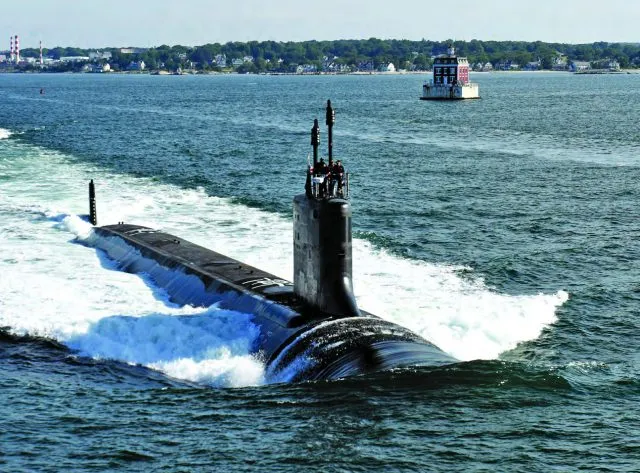
The United States, Australia and the United Kingdom have designated USS Colorado as the first Virginia-class fast-attack submarine assigned to Submarine Rotational Force-West at HMAS Stirling, beginning in late 2027.
The United States, Australia and the United Kingdom have designated USS Colorado (SSN 788) as the first US Navy Virginia-class fast-attack submarine assigned to Submarine Rotational Force-West, the three countries' defence chiefs announced in a joint statement. The submarine is to begin its rotation at HMAS Stirling in Western Australia in late 2027.
Submarine Rotational Force-West is projected to host up to four US fast-attack submarines and one British fast-attack submarine on a rotational basis. The partners said the force will accelerate Australia's readiness to own, operate, maintain and regulate a sovereign, conventionally armed, nuclear-powered submarine capability, and will expand maintenance and sustainment options for allied deployments in the region.
The announcement comes ahead of a US submarine maintenance period beginning later this week, which the partners said will further demonstrate Australia's growing ability to sustain US and British nuclear-powered fast-attack submarines. US Congressman Joe Courtney, whose Connecticut district includes the Electric Boat shipyard that built Colorado, called the designation another milestone for the AUKUS security agreement.
The joint statement is the primary source for the designation, the late-2027 start date and the planned size of the rotational force. It also records that the force will operate under the US-Australia Force Posture Agreement and consistently with the partners' obligations under the Nuclear Non-Proliferation Treaty and, for Australia, the South Pacific Nuclear Free Zone Treaty.
The designation is a step in AUKUS Pillar I, the plan to field conventionally armed, nuclear-powered submarines and expand joint undersea capacity in the Indo-Pacific. The wider programme, which Australian government forecasts cited in the coverage put at up to $235 billion over 30 years, remains a long build: the first rotational deployment is still more than a year away, and Australia's own submarines come later.
The next markers are practical ones: this week's maintenance period at Stirling, the arrival of the first rotation in late 2027, and whether the rotational model delivers the maintenance capacity the partners say it will.