
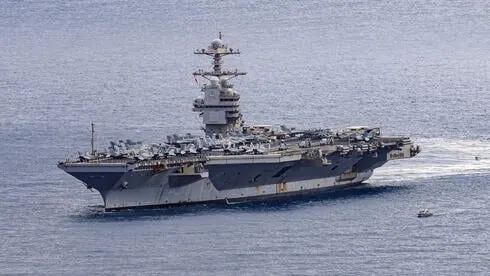
CNN reported that United States forces in the Middle East are prepared to launch a large-scale strike on Iran within 96 hours of an order from President Donald Trump, even as Trump said there would be no strike on Sunday.
United States forces deployed in the Middle East are prepared to launch a large-scale strike on Iran within 96 hours of an order from President Donald Trump, CNN reported on Monday, citing two American officials. Commanders told the network that the forces already in the region are sufficient for the operation, and that planning goes beyond the limited, periodic strikes used in recent months.
Trump himself said on Sunday that there would be no strike that day, answering reporters as he left the White House for a campaign rally in Michigan. A day earlier he had said a strike could come the following day, and in a Fox News interview he framed the choice facing Washington as a deal with Tehran or finishing off its government. He gave no deadline and no specific terms for a deal.
The readiness reporting and the president's public remarks point in different directions, and that gap matters. The CNN report describes capability and preparation: forces in place, and an expanded target list that, according to a separate New York Times account, includes Iranian energy infrastructure and other economic facilities. Trump's Sunday remark describes a decision for that day only. Neither account says an order has been given, and American officials quoted in the reporting said the timing of any decision remains open, with action seen as more likely after the November 3 midterm elections.
CNN's account of the 96-hour readiness rests on two unnamed American officials, as reported by two outlets carrying the network's story, and the Pentagon has not confirmed the plan in the material checked. Trump's Sunday denial and his deal-or-force framing are his own public words, reported consistently across several outlets. The New York Times account of an expanded target list, and Israeli media reports that Prime Minister Benjamin Netanyahu ordered a pre-election strike that the Israeli military chief opposed, are attributed reports, not confirmed decisions.
The stakes run through oil and the wider region. Brent crude fell back below 110 dollars a barrel on Monday after Qatari mediators travelled to Tehran in a United States-coordinated effort to lower tensions, unwinding some of the risk premium built up last week when Brent neared a six-month high. A strike, or a deal, would move that calculation again, and the next fixed points are the midterm elections and the Federal Reserve's meeting this week, which traders are already watching for the inflationary fallout of dearer energy. Until an order is given or a negotiation is announced, the public picture is preparation without a decision.