
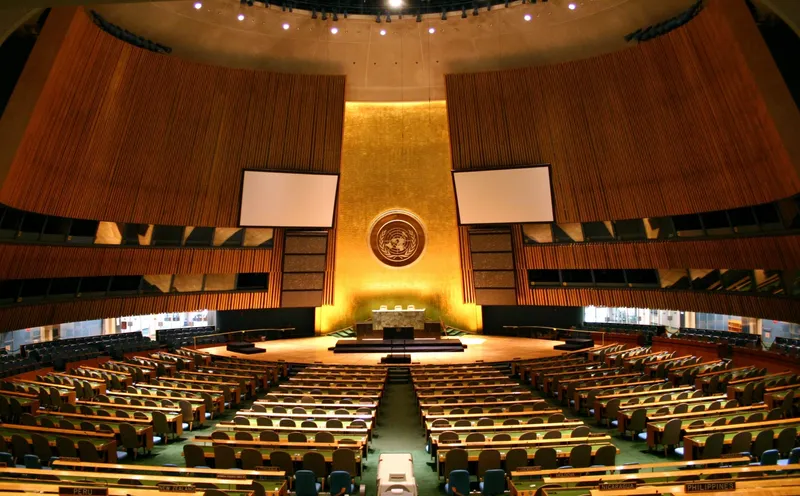
United States Ambassador Mike Waltz and Cuban Foreign Minister Bruno Rodriguez clashed in the UN General Assembly on October 27, a day before the body's 34th annual vote on a resolution calling for an end to the US embargo against Cuba.
The United States and Cuba clashed openly in the United Nations General Assembly on October 27, a day before member states were due to vote for the 34th time on a resolution calling for an end to the decades-long US economic embargo against Cuba. The exchange interrupted the annual debate, with the Assembly president briefly suspending the session before discussion resumed.
US Ambassador Mike Waltz told the chamber there was no blockade, pointing to US exports to Cuba of more than 876 million dollars in the first eight months of 2026. He argued that Cuba's hardship was caused by its own government, saying the country's wealth had passed from ordinary Cubans to the ruling elite. Cuban Foreign Minister Bruno Rodriguez interrupted Waltz on a point of order, called him a liar, and later described his remarks as ridiculous lies that undermined the dignity of the Assembly and the Cuban people. Rodriguez was due to deliver Cuba's statement on October 28, when the vote was scheduled.
The resolution itself is not legally binding, but it has passed overwhelmingly every year since Cuba first brought it in 1992. Last year's vote was 165 in favour, 7 against, with 12 abstentions. Cuba's own figures, carried in its report to the Assembly, put embargo damage at 8.0833 billion dollars between March 2025 and February 2026 and accumulated losses at 178.7005 billion dollars over more than six decades. Those are Havana's figures, not an independently audited tally.
The debate and the clash, the brief suspension of the session and the scheduled October 28 vote are all confirmed in the United Nations' own account of the proceedings, and the Associated Press account corroborates the clash and last year's vote tally. What has not been established in those accounts is the outcome of the October 28 vote itself, and this story does not claim a result. A separate claim, attributed to Waltz in a television appearance, that a Cuban diplomat was expelled after allegedly shoving a US diplomat, could not be confirmed from a State Department source in the checks for this story, and it is left out rather than reported as fact.
The stakes are political rather than legal. A non-binding resolution does not lift the embargo, but the margin, and any shift in opposition or abstentions after an unusually public US lobbying campaign, will be read as a measure of how much support Washington's maximum-pressure policy retains among allies and the wider membership. Cuba, meanwhile, is weathering a deepening financial and energy crisis, and its delegation has linked US measures to fuel shortages and blackouts at home. The vote will show whether that argument still commands the near-unanimous support it has had for three decades, or whether this year's confrontation has moved votes.