
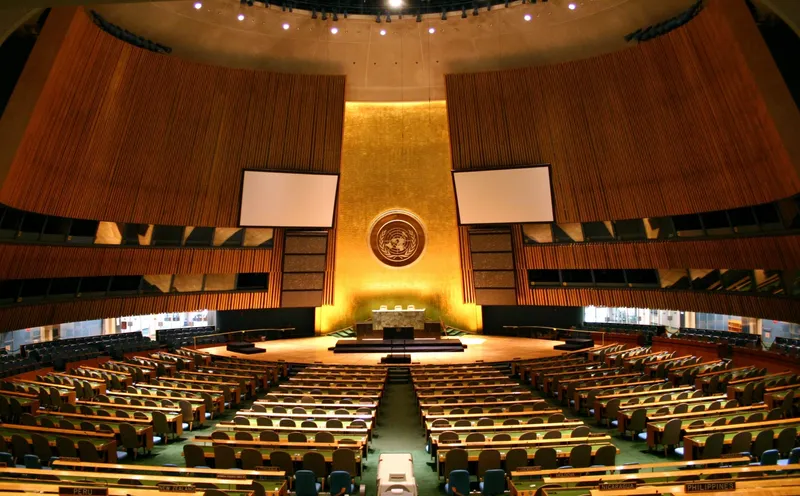
The UN General Assembly voted 130-17, with 25 abstentions, to urge an end to the US embargo on Cuba on October 28, a far narrower margin than last year's 165-7, after Washington lobbied countries to oppose or abstain.
The United Nations General Assembly overwhelmingly urged an end to the decades-long United States economic embargo on Cuba on Wednesday, voting 130 in favour, 17 against and 25 abstaining. The resolution, adopted for a 34th year, is not legally binding: only the US Congress can lift the embargo.
The margin was far narrower than last year, when the tally was 165 in favour, 7 against and 12 abstentions. Several Western countries, including Germany and Italy, abstained for the first time in many years, and countries voting against included the United States and Israel, along with Colombia, Ecuador, Morocco and Slovenia in one account of the vote.
US envoy Mike Waltz told reporters after the vote that he was satisfied so many countries, including major economies such as South Korea and Germany, had shifted position, and said he expected the shift to grow. In the same briefing he accused a Cuban diplomat of assaulting an American diplomat during exchanges on Tuesday and said Richard Tur de la Concepcion, a first secretary at Cuba's UN mission, would be expelled and put on a plane to Havana on Wednesday. Cuba's UN mission did not immediately respond.
The vote count and last year's comparison are reported by Reuters and match the tally in a second account of the vote, which also records Germany, Italy and Latvia refraining for the first time in the resolution's history. The expulsion claim rests on Waltz's own account to reporters; no Cuban response was reported. Cuban Foreign Minister Bruno Rodriguez, writing on X after the vote, accused the US government of trying to strangle the Cuban people, a characterisation the reporting attributes to him rather than adopting as fact.
The vote lands as Cuba faces what Reuters describes as its worst economic downturn in decades, with shortages of basic goods, collapsing infrastructure and runaway inflation, and a month after the island's electrical grid suffered a total collapse. US tariff threats against Cuba's oil suppliers have effectively cut off fuel deliveries, according to the second account, and President Donald Trump said at the UN last month that Cuba was a failed state.
The embargo itself remains in place after the vote, and the practical question now is whether Washington's lobbying gains hold at next year's vote and whether the expulsion escalates the diplomatic confrontation that included shouting matches last week and shoving on the General Assembly floor on Tuesday.