
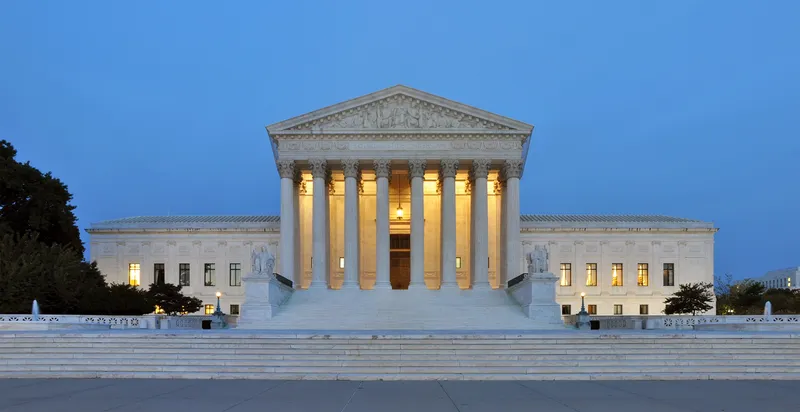
The Supreme Court on Oct 27 declined to reinstate immigration judges' authority to administratively close deportation cases, leaving in force the Trump administration-Texas agreement barring the decades-old docket practice while litigation continues.
The United States Supreme Court declined on Tuesday to restore immigration judges' power to temporarily shelve deportation cases, leaving in place an arrangement between the Trump administration and Texas that bars the practice known as administrative closure. The justices turned away an emergency request from three cities and an immigrant legal services group, Reuters reported.
The decision came as a brief, one-sentence order with no explanation, as is common for emergency requests, and no justice publicly dissented. It does not end the underlying litigation, but it means the bar on administrative closure stays in force while the case continues.
Immigration judges had used administrative closure for decades to take cases off their active dockets, for example while a separate proceeding involving the same person, such as a visa petition or an appeal of a criminal conviction, could affect whether removal was possible. The practice has been applied in hundreds of thousands of deportation cases over the years.
Texas and the Trump administration argued the practice effectively let people without lawful status remain indefinitely, describing it as a form of amnesty. The two sides filed a joint agreement in a Texas federal court on June 22, the same day Texas sued to challenge the procedure, and a federal judge swiftly approved it, blocking the Biden-era rule nationwide.
The challengers — Baltimore, New Haven and Columbus, Ohio, together with Centro Legal de la Raza — argued the administration bypassed proper rulemaking by using what they called manufactured litigation with an ideologically aligned state to kill a regulation it disliked. The Fifth Circuit Court of Appeals had already declined to pause the agreement while the cities appealed.
The dispute traces back to a 2024 Biden administration regulation that formally codified administrative closure as a way for judges to manage crowded dockets and treat immigrants fairly. After President Donald Trump returned to office in 2025, the Justice Department office overseeing immigration courts declined to defend that rule against Texas's challenge, setting up the agreement the Supreme Court has now left standing.
People Sentiments Public Mood: Neutral
- Texas and the Trump administration: administrative closure acts as de facto amnesty letting people remain indefinitely
- Baltimore, New Haven, Columbus and Centro Legal de la Raza: the Texas agreement was collusive, manufactured litigation bypassing rulemaking
- Supporters of the Biden rule: closure lets judges manage dockets and treat immigrants fairly while related proceedings resolve