
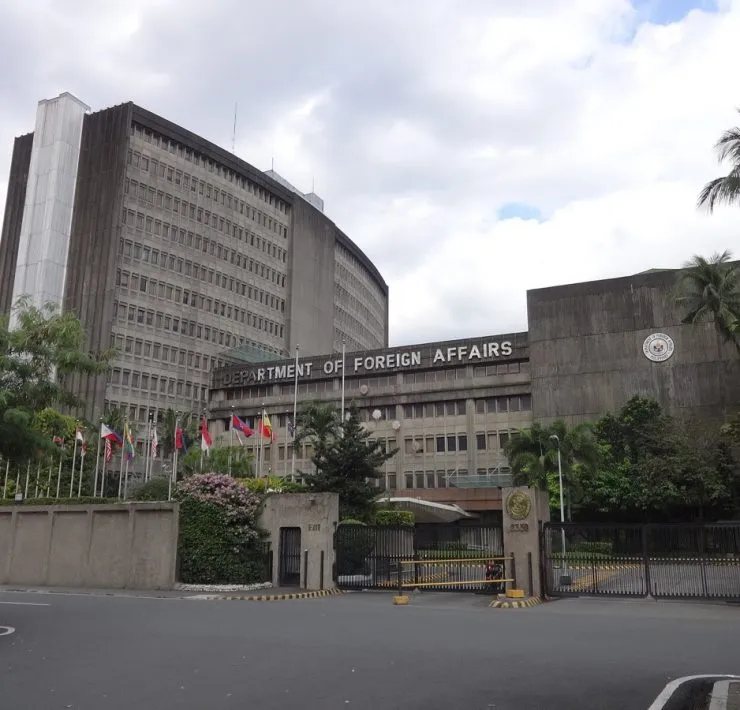
The Philippines' Department of Foreign Affairs said on Monday there is no arrangement with Taiwan on subsea cables or other critical undersea infrastructure, reaffirming the country's One China Policy days after a Filipino diplomat said Manila and Taipei were exploring deeper cable cooperation.
The Philippines has no arrangement with Taiwan to protect undersea cables, the Department of Foreign Affairs said on Monday, distancing the government from a Filipino diplomat's remarks in Washington last week. The department said there is no cooperative arrangement with Taiwan on subsea cables or other critical undersea infrastructure, and affirmed that the country continues to adhere to its longstanding and consistent One China Policy.
The denial follows remarks by Felipe Cariño III, deputy chief of mission at the Philippine Embassy in Washington, at a seminar hosted by the Center for a New American Security on 21 October. Cariño said the Philippines and Taiwan were exploring deeper cooperation to jointly protect undersea cables, describing a practical approach to protect shared interests in the Bashi Channel, the waterway between Batanes and southern Taiwan, and said the cooperation could lead toward addressing what he called gray-zone issues. Asked whether it could include joint patrols or holding vessels accountable for damaging cables, he said he did not have details. The department said the forum discussion centred on protecting critical undersea infrastructure through stronger public-private cooperation, mainly in repairing and recovering damaged facilities, and that there was no mention of gray-zone activity cooperation with Taiwan.
China warned the Philippines on 22 October that it should strictly adhere to the one-China principle with real actions, according to Chinese Foreign Ministry spokesperson Mao Ning, and sent Taiwan a similar message. The Philippines' coast guard had earlier in October deployed its largest vessel and an aircraft to challenge a Chinese research ship operating off northern Batanes near undersea cable corridors. The Philippines and Taiwan have repeatedly complained about Chinese activities designed to pressure them without direct confrontation, and China claims Taiwan as its own territory with overlapping claims with the Philippines in the South China Sea.
The denial is reported from a department statement sent to reporters, so it is presented here as the department's position rather than as an independently observed fact. Cariño's remarks and China's warning are confirmed by Reuters reporting from 21 and 22 October. The two accounts do not fully cancel each other out: the department denies an arrangement, while Cariño spoke of exploring cooperation, and this report keeps that distinction rather than treating either statement as the whole story. What remains unconfirmed is whether any informal discussions continue behind the denial.
Undersea cables carry almost all intercontinental data, which is why a dispute about protecting them carries weight beyond the wording of a denial. The Bashi Channel sits between two claimants' shores, and any cooperation there touches the wider South China Sea contest. The next signals to watch are whether Beijing accepts the clarification, and whether Manila issues any further statement on what, if anything, its officials discussed in Washington.