
North Korea's ambassador to the United Nations sent a letter on 25 October accusing South Korea of fabricating a 21 September mine explosion in the Demilitarized Zone, as a North Korean self-propelled howitzer was spotted in clear view near the border.
North Korea's permanent representative to the United Nations sent a letter on 25 October to the president of the Security Council, reported by the Korean Central News Agency on Monday, accusing South Korea of fabricating a mine explosion in the Demilitarized Zone (DMZ) on 21 September. The letter claims Seoul manipulated the blast to depict North Korea's border fortification work as a military incursion.
The letter warns that if South Korea violates North Korea's sovereignty, Seoul will be “wholly accountable for all the ensuing consequences,” and invokes self-defence under Article 51 of the UN Charter. It responds to South Korea's letter the previous week, which said the 21 September blast was planted by North Korean troops, injured three South Korean soldiers, and violated the Korean War Armistice Agreement. The UN Command has said a North Korean mine across the line violated the armistice, and Pyongyang denies responsibility for the blast.
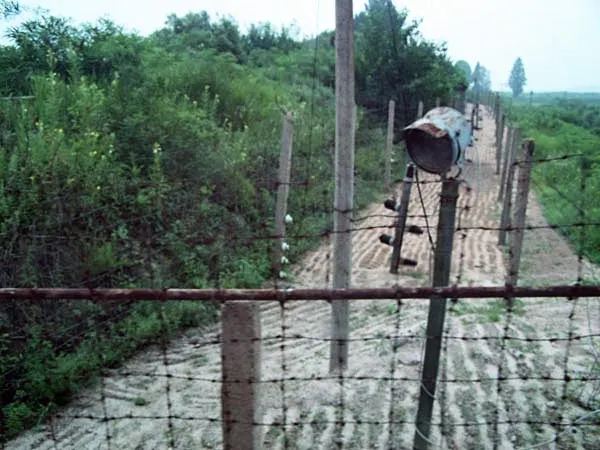
At the same time, a Reuters witness at a South Korean border observatory on Monday confirmed a North Korean artillery piece in clear view near the frontier. Yonhap identified it on Sunday as a self-propelled 122mm howitzer, a rare public display. Reuters also observed three North Korean armoured vehicles with barrels pointed south and 20 to 30 soldiers doing fencing work inside the DMZ.
The claim that the blast was staged is Pyongyang's accusation, explicitly disputed by Seoul and the UN Command, and it is reported here as an accusation, never as fact. The howitzer sighting, by contrast, is independently supported by the Reuters witness observation and the Yonhap identification. No confirmed casualty or clash on 25 or 26 October is reported.
Professor Lim Eul-chul of Kyungnam University, quoted by Reuters, said it is “highly unusual” to expose self-propelled artillery so conspicuously, signalling enforcement of border policy by force rather than dialogue and warning Seoul against escalation.
South Korea's unification ministry said on Monday that the letter repeats Pyongyang's existing position and seeks to justify its border-marking work, and Seoul has proposed dialogue. Whether that dialogue happens, or whether the artillery display hardens into a standoff, is the question the next days will answer.