
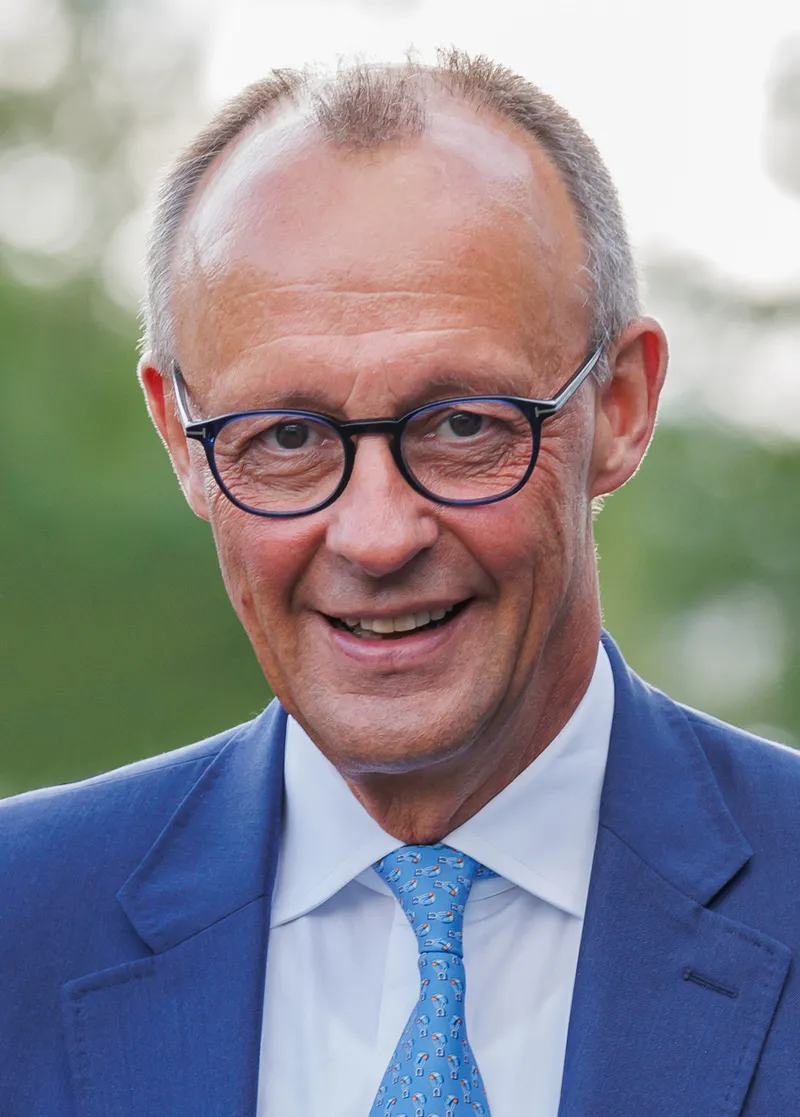
German Chancellor Friedrich Merz called in Singapore for an interregional trade agreement between the EU and the 12-nation CPTPP, pitching closer Europe-Asia cooperation.
German Chancellor Friedrich Merz called on Tuesday in Singapore for a large-scale free trade agreement between the European Union and the members of the Comprehensive and Progressive Agreement for Trans-Pacific Partnership, pitching closer cooperation between middle powers in Europe and Asia.
Merz made the call in a keynote speech at Singapore's ISEAS Yusof Ishak Institute, on the first stop of a week-long Asia trip that will also take him to Japan and South Korea. He said the EU and the 12-nation CPTPP together account for more than a third of global trade, and that the pact's members are home to close to 600 million people. He also backed a long-term free trade agreement between the EU and ASEAN. Singapore's Prime Minister Lawrence Wong said his country, when it takes over as ASEAN chair in 2027, will push to make progress on an ASEAN-EU deal.
Merz framed the push as a response to rising trade restrictions, calling it a deliberate counterpoint to what the world is currently seeing and saying there is a better way. He said Germany's China policy was coming of age, warned that full economic decoupling from China would be a mistake, and said Europe and Asia must reduce unhealthy, one-sided dependencies in supply chains, technologies and raw materials. EU ministers last week called for deals with Beijing to curb imports across sectors including chemicals and machinery, against a goods trade deficit running above 1 billion euros a day.
Reuters and dpa accounts of the speech agree on the proposal, the venue and the quotes, including Merz's line urging both sides to work towards a big interregional agreement with the Trans-Pacific Partnership members. One limit matters: trade deals are negotiated by the EU, not by Berlin, so Merz's call is a proposal to Brussels rather than a deal itself.
The stakes are diversification. If the EU deepens ties with the CPTPP and ASEAN, European exporters gain an alternative to markets where tariffs and restrictions are rising, and Germany reduces its exposure to China. The next markers are Merz's stops in Japan and South Korea this week, and whether Singapore's 2027 ASEAN chairmanship turns the ASEAN-EU ambition into negotiations.