
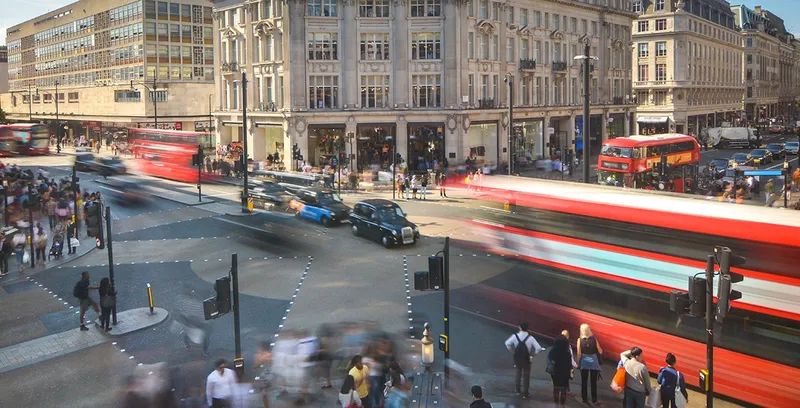
Almost a kilometre of Oxford Street, from Orchard Street to Great Portland Street, became traffic-free on October 26, barring buses, taxis, cycles and other vehicles from London's busiest shopping street in the first phase of a long-debated pedestrianisation.
Almost a kilometre of Oxford Street, from Orchard Street to Great Portland Street, became completely traffic-free on October 26, beginning the first phase of a long-running plan to pedestrianise London's busiest shopping street. Buses, taxis, private hire vehicles, cycles, pedicabs, e-bikes and e-scooters are excluded from the section, while mobility scooters remain permitted. North-south roads continue to cross Oxford Street, and emergency vehicles and some servicing and cleaning vehicles retain access at specified times.
London Mayor Sadiq Khan said the changes followed strong support from Londoners and businesses and would begin the real transformation of the nation's high street, creating a new public space for retail, leisure and cultural events ahead of the Christmas shopping period. Transport for London has diverted buses onto surrounding streets, with new stops planned on Wigmore Street, Henrietta Place and Cavendish Place. Route 98, for example, is forecast to see peak journey times increase by up to five minutes.
Westminster City Council has objected to the scheme, warning that traffic could be displaced onto smaller nearby streets and raising questions about access, air quality, noise, street cleaning and public safety. The council had considered a judicial review but confirmed in June that it would not proceed, after legal advice that a challenge was unlikely to succeed. Clean Cities' UK director, Oliver Lord, welcomed the change, saying it would help create a safer, healthier and more vibrant city centre.
The start date of October 26 and the extent of the closure, from Orchard Street to Great Portland Street, are consistent across the mayor's announcement reporting and first-morning accounts of the scheme. The initial changes are temporary rather than permanent: Transport for London and the Oxford Street Development Corporation will collect feedback and data on how the space is used before permanent improvements are designed, with plans including new seating, trees and two new public squares by the end of spring 2027.
The test of the scheme will come over the Christmas trading period, when the street is at its busiest and the effects on surrounding roads, bus journey times and shop trading can be measured against the forecasts. Any decision to extend pedestrianisation beyond the current section, or to make it permanent, will depend on that evidence and on further decisions by the mayor and the development corporation.