
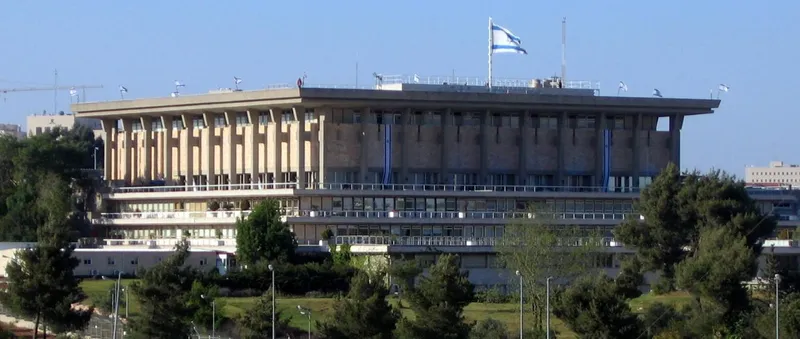
Israel votes on October 27 for the 120-seat Knesset, with final polls disagreeing on whether Prime Minister Benjamin Netanyahu's bloc reaches the 61 seats needed to govern.
Israelis vote on October 27 for the 120-seat Knesset, choosing party lists rather than a prime minister directly, in an election where no camp looks assured of the 61 seats needed to form a government.
Polls describe a tight contest between Prime Minister Benjamin Netanyahu's Likud and former army chief Gadi Eisenkot's new Yashar party for the largest party, with several small parties polling close to the 3.25 percent electoral threshold. Who governs could turn on whether those small parties cross it, and on turnout.
The final polls do not agree. Channel 14's final survey, conducted among 7,937 respondents, gives Netanyahu's bloc 62 seats, one above the majority line, with Likud on 30 and Yashar on 20. An average of four surveys published on October 18, from Maariv, Channel 13, Kan and Channel 12, instead puts the two blocs virtually tied, with the opposition averaging 51.25 seats against 51 for Netanyahu's bloc, and Maariv giving each side exactly 51. The gap between pollsters is larger than the gap between the blocs, and readers should treat any single projection as uncertain.
The issues in the campaign include a state inquiry into October 7, ultra-Orthodox conscription, judicial reforms, the economy, security in the West Bank and Gaza, relations with Iran and the United States, and, for Arab voters, crime. United States President Donald Trump endorsed Netanyahu nine days before the vote and warned that choosing anyone else would leave the United States to handle Iran alone.
The stakes run past election night. Whatever the count, the result will be settled in coalition negotiations, where the Arab parties, projected at 13 to 15 seats in various polls, could hold the balance, and where a deadlock could bring a unity government, which a Maariv poll found most Israelis prefer, or another election. The first test comes when the votes are counted on October 27 and the president begins consultations on who should try to form a government.
People Sentiments Public Mood: Neutral
- A majority of Israelis prefer a unity government if the October 27 election ends in deadlock, according to a Maariv poll
- Only 27 percent of respondents in that poll prefer another election