
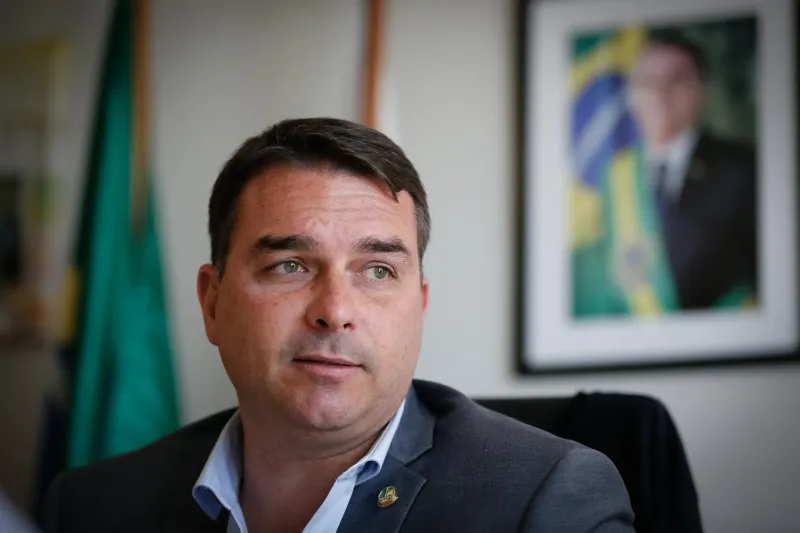
Brazilian Senator Flavio Bolsonaro missed a Supreme Court deadline to turn in his passports to federal police, and the documents have since been cancelled, two sources familiar with the matter told Reuters.
Brazilian Senator Flavio Bolsonaro has missed a Supreme Court deadline to turn in his passports to the country's federal police, two sources familiar with the matter told Reuters on Tuesday, adding that the documents had since been cancelled.
Bolsonaro, who was defeated on Sunday by President Luiz Inacio Lula da Silva in a runoff vote, revealed on Monday that police had requested that he turn in his passports following a ruling from Supreme Court Justice Alexandre de Moraes. The eldest son of former far-right President Jair Bolsonaro is under investigation in a money laundering probe, which he denies, and his whereabouts were unknown on Tuesday.
The missed deadline follows a fast-moving post-election sequence: Bolsonaro's party recognised Lula's win as a court barred the defeated candidate from leaving Brazil, after Bolsonaro had initially refused to accept the result and said he would seek an annulment. The passport order is the enforcement mechanism behind that travel restriction, and its deadline passing without compliance, followed by cancellation of the documents, tightens the legal pressure on the defeated candidate days after the vote.
This account rests on two unnamed sources speaking to Reuters, not on a court or police statement published so far, and the article attributes the missed deadline and the cancellation to those sources rather than presenting them as officially confirmed. The underlying facts that are on the record are the runoff defeat, the passport request Bolsonaro himself disclosed on Monday, the Supreme Court ruling behind it, and the money laundering investigation, which Bolsonaro denies.
What happens next depends on the court: whether it treats the missed deadline as a further matter for sanction, and whether any official statement clarifies Bolsonaro's status and location. For Lula, the episode removes a potential post-election flashpoint but keeps the defeated candidate's legal troubles at the centre of the political story as the new government takes shape.