
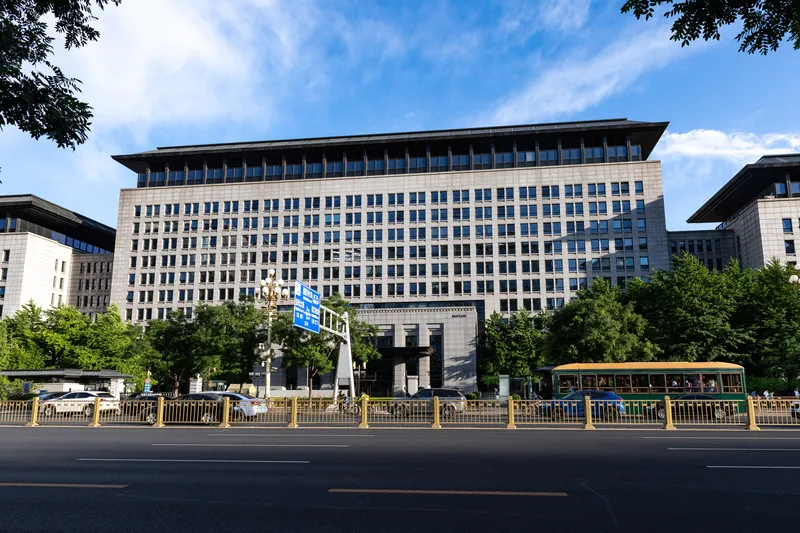
China's commerce ministry urged the US to halt a proposed expansion of outbound investment curbs covering biotechnology, high-performance computing and hypersonics, warning it would damage trade ties and reserving the right to countermeasures.
China's commerce ministry urged the United States on Saturday to stop expanding restrictions on American investments in China, saying a proposed rule on sensitive technologies would disrupt trade ties between the two countries. The US Treasury Department had issued proposals on Thursday to update its outbound-investment security programme, adding biotechnology to the restricted sectors and expanding coverage of high-performance computing and hypersonic systems.
Beijing's ministry said in a statement that the proposal discriminatorily widened China-related investment restrictions and intensified curbs, that it firmly opposed the proposal, and that it reserved the right to take unspecified countermeasures. It also said the proposal would damage bilateral economic ties and run counter to the consensus reached by the two countries' presidents, who have met twice in the past six months.
The Treasury Department has said the measures, which do not only cover China, are intended to stop US capital from supporting foreign adversaries' development of dual-use strategic technologies that could threaten US national security. The programme already restricted certain US investments involving China in semiconductors, quantum technologies and artificial intelligence, so the proposal extends an existing framework rather than creating it.
Both sides of this dispute are reported through Reuters' account of the two statements, which quotes the ministry's language and the Treasury's stated purpose, so the disagreement itself is documented even though neither side has published a full text in the material checked. Two limits apply to what can be claimed: the US move is a proposal, not a final rule, and Beijing's countermeasures are reserved rather than specified, so neither a new ban nor a retaliation has actually happened yet.
The dispute lands while China's ruling party is in session for its fifth plenum in Beijing, a meeting already covered in this feed, which gives Beijing's response a domestic audience as well as an American one. What happens next depends on two open questions: whether the Treasury finalises the proposal as drafted, and whether Beijing follows its reserved right with a concrete measure, since either step would turn a warning into a change in what investors can actually do.