
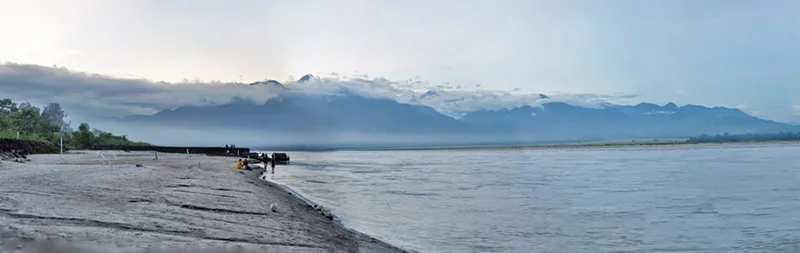
The Centre airlifted two Rapid Action Force companies, about 250 personnel, to Pasighat in Arunachal Pradesh after protests against the proposed 11,200-MW Siang Upper dam project turned violent, with an NHPC office and a police station torched.
The central government has sent two Rapid Action Force companies of the Central Reserve Police Force, about 250 personnel, to Arunachal Pradesh after protests against a proposed dam turned violent in Pasighat. The Ministry of Home Affairs directed on Saturday that the companies be airlifted from Navi Mumbai aboard an Indian Air Force transport aircraft, to reach Pasighat and deploy by Sunday.
Violence erupted in Pasighat after a 12-hour bandh across Siang, Upper Siang and East Siang districts ended on Friday night, and continued until about 3:30 am on Saturday. A mob torched an office of the state-run hydropower developer NHPC and a police station, and vandalised the residences of three political leaders, including the state BJP chief, in East Siang district, according to Arunachal Pradesh Police officials. Several police and central-force personnel were injured.
The trigger is the proposed 11,200-megawatt Siang Upper Multipurpose Project, which has drawn sustained local opposition in the Siang valley. The deployment is the Centre's direct response to the Pasighat violence rather than a ruling on the project itself, and no decision on the dam's future has been announced in connection with the deployment.
The deployment, the arson and the vandalism are reported by the Press Trust of India, carried by The Hindu BusinessLine, and corroborated by a second account of the same events. Accounts differ slightly on the damage to police vehicles: the district's deputy commissioner put the number of vehicles burnt at seven, while another account put the figure at seven to eight, so this report uses the deputy commissioner's figure. The 11,200-megawatt capacity and the project name are consistent across both accounts.
The stakes are whether a local protest over one dam becomes a wider confrontation over hydropower in the Siang valley. A central-force deployment raises the temperature, and the next developments to watch are whether protests continue in the three districts, what the state government says about the project, and whether the Centre pairs the security response with any statement on the dam itself.