
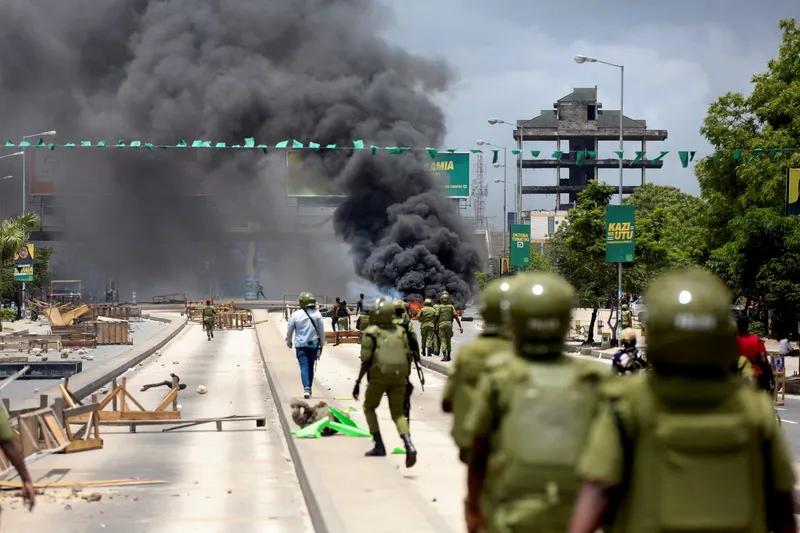
Amnesty International said on October 28, the first anniversary of Tanzania's 2025 election crackdown, that not a single official has been criminally investigated for excessive force against protesters, and that authorities are now using counterterrorism laws against critics.
Tanzanian authorities have failed to hold anyone accountable for the violence security forces inflicted on protesters after the 2025 general election, Amnesty International said on October 28, the first anniversary of the crackdown. The organisation said hundreds of people were killed and thousands injured, and that not a single official has been criminally investigated, let alone prosecuted, for excessive force.
A government-appointed Commission of Inquiry reported 518 deaths across 11 regions, according to secondary reporting of its findings, with a warning that the figure might not be conclusive. That report was handed to President Samia Suluhu Hassan in April 2026 and has yet to be made public. In August 2026 she inaugurated a second commission to identify those who planned, funded or carried out the violence, investigate excessive force and trace missing persons. Amnesty says the refusal to publish the first report entrenches secrecy and perpetuates impunity.
Amnesty also documented what it calls the weaponisation of counterterrorism laws over the past year. Between September 3 and 17, 2026, it interviewed 17 people, including victims of arbitrary arrest and enforced disappearance, journalists, opposition officials and lawyers, and verified charge sheets for people charged with terrorism. Police said 130 people were arrested on July 9 for allegedly organising meetings and messages encouraging criminal acts, of whom at least 64 were charged under the Prevention of Terrorism Act, an unbailable offence. Amnesty cites cases including an opposition youth leader missing since April, a former ruling-party official abducted from his home in June, and a university lecturer arrested in July whose terrorism charge was later dropped.
These are Amnesty's findings, and the story reports them as such: the organisation is the primary source for its own statement, not an independent court finding on each underlying allegation, and Tanzanian authorities did not respond to Amnesty's request for comment. The 518-death figure comes from reporting of the commission's work, not from the Amnesty page itself, and President Suluhu's allegation that protests were foreign-funded is reported by Amnesty as her claim, not as a verified fact.
The stakes, in Amnesty's account, are whether a second inquiry with a mandate to publish its findings can break a year of impunity, or whether terrorism charges continue to be used to silence critics, journalists and opposition supporters. The organisation is calling for terrorism charges against people detained solely for exercising human rights to be dropped, for the first inquiry report to be released, and for media suspensions, including the six-month suspension of the Mwanahalisi newspaper in August, to be revoked.