
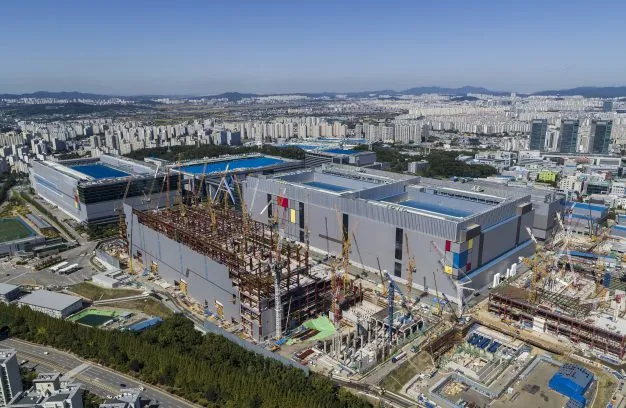
South Korea's economy grew 1.0% in the third quarter of 2026 from the previous quarter, beating the Bank of Korea's August forecast of 0.3%, as semiconductor-led exports and facility investment rose while private consumption fell 0.2%.
South Korea's economy grew 1.0% in the third quarter of 2026 from the previous quarter, according to advance estimates released by the Bank of Korea on October 27, accelerating from 0.6% growth in the second quarter. Compared with a year earlier, output rose 3.4%, easing slightly from 3.7% in the second quarter.
The result beat both the Bank of Korea's August forecast of 0.3% and the median 0.7% increase expected in a Reuters poll of economists, making it the third consecutive quarter in which actual growth has exceeded the central bank's forecast. Exports rose 2.3% from the previous quarter, led by semiconductors, machinery and electrical equipment, while facility investment climbed 4.1%, centred on equipment used to make semiconductors, and manufacturing output grew 2.0%.
The Bank of Korea's own briefing puts semiconductors at the centre of the story: Lee Dong-won, director general of the bank's economic statistics department, said about half of economic growth was being driven by semiconductors, and that chip production volumes would expand further next year. Exports in the first nine months of the year had already passed $800 billion, above the previous full-year record, and are on course to exceed $1 trillion for the year.
The same release shows the limits of the boom. Private consumption fell 0.2% from the previous quarter, its first quarterly decline in nearly four years, as spending on goods and services weakened, while government consumption rose 1.9% and helped offset the household softness. Real gross domestic income rose 18.8% from a year earlier, its fastest increase since the fourth quarter of 1977, as higher semiconductor export prices improved the terms of trade.
The figures are the central bank's preliminary estimate, and the Reuters account and the Bank of Korea briefing agree on the headline rates, the export and investment breakdown, and the consumption decline. The 1.0% quarterly figure compares July to September with April to June, while the 3.4% figure compares the quarter with the same period in 2025, and neither is the final growth rate for all of 2026.
The stakes are in the Bank of Korea's next outlook, due next month. The third-quarter beat alone raises the annual growth rate by about 0.35 percentage points, according to Lee, and if fourth-quarter output simply holds at the third-quarter level, the economy would grow 3.7% this year against the bank's August projection of 3.3%. Whether households feel that growth depends on the recovery in private spending that Lee said could follow dividend payouts and bonus payments in the coming months.