
South Korea's all-industry Composite Business Sentiment Index rose to 104.2 in October, its highest since August 2022, as stronger auto production and chip investment lifted both manufacturing and nonmanufacturing sentiment, the Bank of Korea reported.
South Korean business sentiment rose to its highest level in more than four years in October, with the Bank of Korea's all-industry Composite Business Sentiment Index reaching 104.2, up 5.1 points from September and the strongest reading since August 2022.
Manufacturing sentiment climbed 6.1 points to 105.6, its highest since June 2022, while nonmanufacturing sentiment rose 4.3 points to 103.2, the strongest since September 2022. The November outlook for all industries stood at 101.8, and the broader Economic Sentiment Index, which combines business and consumer indicators, rose 0.9 point to 100.8, its highest since June 2022. A reading above 100 means sentiment is stronger than the long-term average from 2003 to 2025.
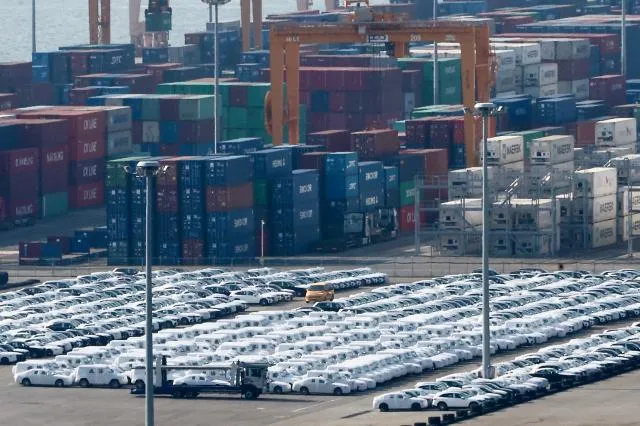
The improvement was driven by production and orders after disruptions from the Chuseok holiday and automaker strikes faded. Manufacturing production rose 5 points to 94 and new orders gained 4 points to 91. In autos, the production index jumped 30 points and new orders rose 20 points, while passenger-car exports rose 40.9 percent from a year earlier in the first 20 days of October after falling 5.6 percent in September. Chemical producers also reported production and new orders up 19 points on stronger demand from battery and energy-storage makers, and construction sentiment improved on orders for semiconductor plants, data centres and housing in the Seoul area.
The headline figure comes from the Bank of Korea's October business survey, reported consistently by Aju Press and Yonhap via the Korea JoongAng Daily on the 104.2 level, the 5.1-point monthly rise and the sector splits. Two cautions in the same survey qualify the celebration. First, the Bank of Korea warned that October was the first survey based on a revised sample reflecting 2024 corporate tax filings, so comparisons with September and earlier months may partly reflect that regular three-year sample overhaul rather than a pure change in mood. Second, firms' own rating of overall business conditions did not rise with the composite: the manufacturing business-conditions index slipped 1 point to 78 in October, and its November outlook fell 3 points to 78, a reminder that the composite blends production, orders, inventories and financial conditions, not just how firms rate conditions today.
Weak domestic demand remained the most commonly cited difficulty, named by 21.6 percent of respondents, followed by higher raw-material prices at 19.9 percent and economic uncertainty at 13.7 percent, while labour shortages and higher labour costs accounted for 8.0 percent, up 2.7 percentage points from September. That mix matters because the rebound is concentrated in export-linked production and investment in semiconductors, autos and shipbuilding, and the Bank of Korea attributed part of the gain to a stronger won easing the cost of imported raw materials.
The next monthly survey will test whether the gain holds once the revised sample is the common basis for comparison, and whether the stronger production and orders translate into firms rating their overall business conditions more highly than 78.