
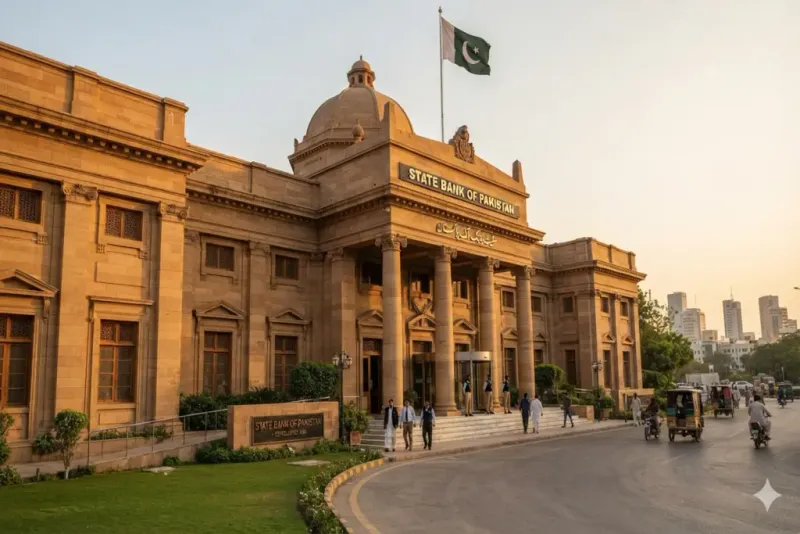
The State Bank of Pakistan raised its benchmark policy rate by 50 basis points to 12% on Monday, its first increase since April, as inflation fuelled by high energy costs from the Gulf conflict stayed above target.
The State Bank of Pakistan raised its benchmark policy rate by 50 basis points to 12% at its Monetary Policy Committee meeting on Monday, the first increase since April. The new rate takes effect on Tuesday, October 27. Nine of the committee's ten members backed the half-point move.
The central bank said the inflation outlook had worsened since its last assessment, driven by the intensification of the Middle East conflict and persistently elevated global energy prices. Headline inflation reached 10.3% year on year in September, above what the committee had expected, while core inflation stayed elevated at around 8.4%. The bank's medium-term target range is 5% to 7%.
The move ends a run of holds. After raising the rate by 100 basis points to 11.5% in April, the committee left it unchanged at its June, July and September meetings while it waited to see whether inflation would settle. Governor Jameel Ahmad said conditions had changed since September, with higher energy and wheat prices threatening to feed into broader prices and expectations.
The decision, the vote and the inflation figures all come from the central bank's monetary policy statement as reported by Reuters and Pakistani outlets, so the core facts are corroborated across the coverage. The committee kept its growth projection for 2026-27 unchanged at 3.5% to 4.5%, saying the external account and growth outlook were broadly unchanged even as risks rose.
The stakes are the familiar central bank trade-off. Higher borrowing costs should help anchor inflation expectations and keep the real interest rate positive, but they also weigh on an economic recovery that has shown signs of losing momentum. The International Monetary Fund urged Pakistan this month to keep monetary policy tight enough to return inflation durably to target, and the country reached a staff-level agreement with the Fund on October 7 that could unlock about $1.21 billion, subject to board approval.
The next decision will turn on whether energy and food prices ease or keep climbing. The committee flagged geopolitical tensions, commodity volatility, energy tariff adjustments, wheat prices and adverse weather as the risks that could complicate the outlook further.