
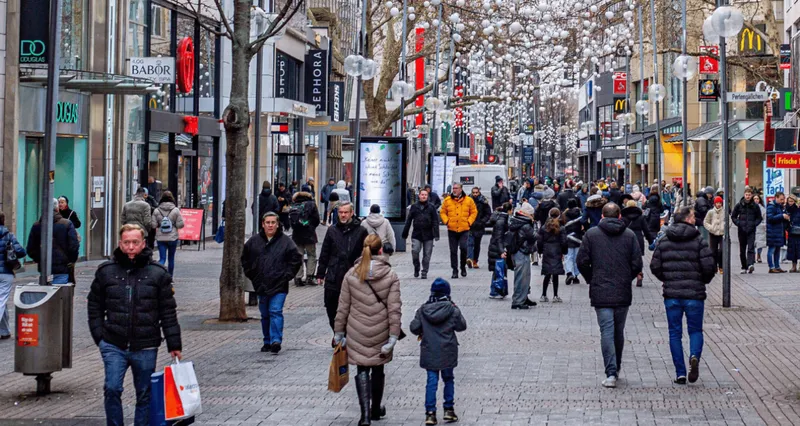
Germany's NIM/GfK consumer sentiment index fell to minus 30.8 points for November from minus 30.6 in October, as income expectations fell and price expectations turned positive, even as economic expectations improved for a sixth month.
German consumer sentiment slipped slightly for November, with the NIM/GfK index falling to minus 30.8 points from minus 30.6 in October, according to a Reuters report of the survey published on October 28. The reading was slightly better than the minus 30.9 average estimate in a Reuters poll of analysts, so the slip was smaller than forecasters expected.
The details show a split mood. Economic expectations improved for a sixth consecutive month, to 2.1 from minus 3.4, moving above zero for the first time since the outbreak of the Iran war. Income expectations, by contrast, fell 0.7 points to minus 15.7, willingness to buy fell to minus 11.9, and price expectations rose to 1.0, into positive territory. Willingness to save fell 4.3 points to 17.2, still high by historical standards. NIM linked the mood to inflation rising to 3.3 percent in September on higher fuel prices. The survey was conducted between October 1 and 12 among about 2,000 consumers.
Rolf Buerkl, head of consumer climate at NIM, said consumers were looking increasingly optimistically at economic developments, but when it came to their own wallets, scepticism still prevailed, with growing inflation worries and subdued income prospects dampening willingness to make larger purchases. That distinction is the story of the release: Germans feel better about the economy in general and worse about their own finances.
The figures come from NIM, publisher of the survey with GfK, as reported by Reuters, and they are expectations, not realised spending or GDP. The minus 30.8 figure is an index value, not a percentage fall in consumption, and the November label refers to the forecast month, based on the early-October survey.
The stakes are for the final quarter of the year. If fuel-driven inflation eases, the improving economic outlook could eventually feed into household spending, which Germany's recovery needs. If prices stay high, the gap between optimism about the economy and caution about personal budgets will persist, and retailers heading into the Christmas season will face consumers who are willing to look but reluctant to buy.