
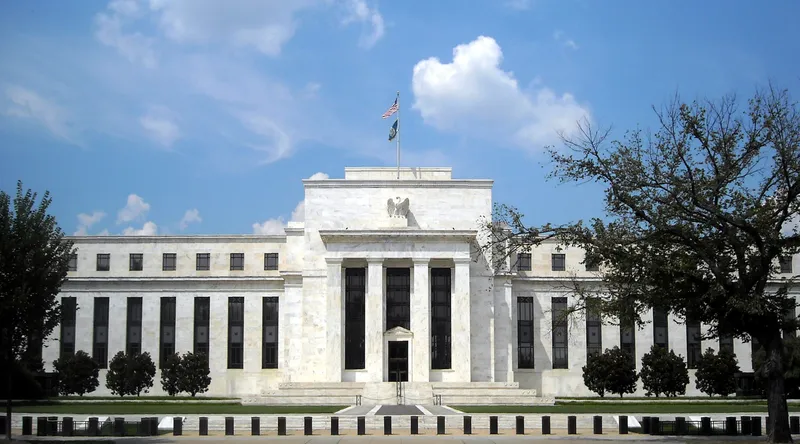
The Federal Reserve held its benchmark rate at 3.75% to 4% on October 28, with Lisa Cook and Beth Hammack dissenting in favour of a rise, and Chair Kevin Warsh later said the Fed would trim its rate-decision meetings in stages.
The Federal Reserve held its benchmark interest rate steady on Wednesday, keeping the target range for the federal funds rate at 3.75% to 4%, after raising rates in September for the first time in more than three years. The decision, announced at 2 p.m. Eastern time, was taken by a 10-2 vote of the Federal Open Market Committee.
The committee's statement described economic activity as expanding at a strong pace, with domestic spending resilient, productivity growth strong and capital investment robust. Job gains, it said, had kept pace with the workforce and the unemployment rate had changed little, while inflation remains elevated.
The two dissenters, Governor Lisa Cook and Cleveland Fed President Beth Hammack, both preferred to raise the target range by a quarter of a percentage point at this meeting. The statement said accumulating more information would help the committee determine the policy stance needed for a timely return of inflation to its 2% goal, and repeated the committee's pledge to deliver price stability.
The rate range, the vote and the statement's language come from the committee's own statement, reproduced in full by Dow Jones, and the market reaction is reported by Reuters. September consumer prices, reported at 3.7% higher than a year earlier against 2.4% in February, are the wire-reported figures behind the inflation debate; the plan to reduce rate-decision meetings was reported by Bloomberg from Warsh's press conference and was not part of the written statement.
At his press conference, Chair Kevin Warsh said the Fed would adjust its meeting schedule in stages from next year, Bloomberg reported: eight meetings a year remains the appropriate number, but one of the eight meetings in 2027 would become a strategic discussion with no rate vote, rising to two in 2028, when the number of rate-decision meetings would fall to six. Bond traders were reported to be pricing roughly a 90% chance of a rate rise in December.
Markets were mixed immediately after the decision, with the Nasdaq down 0.1% and the S&P 500 up 0.1% according to Reuters, then rose after Warsh's remarks, with the S&P 500 up 0.4%, the Nasdaq up 0.3% and the Dow Jones up 170 points. The next hard data for the committee are September personal income and outlays, including the PCE price index, and the advance estimate of third-quarter GDP, both due from the Bureau of Economic Analysis on October 29.