
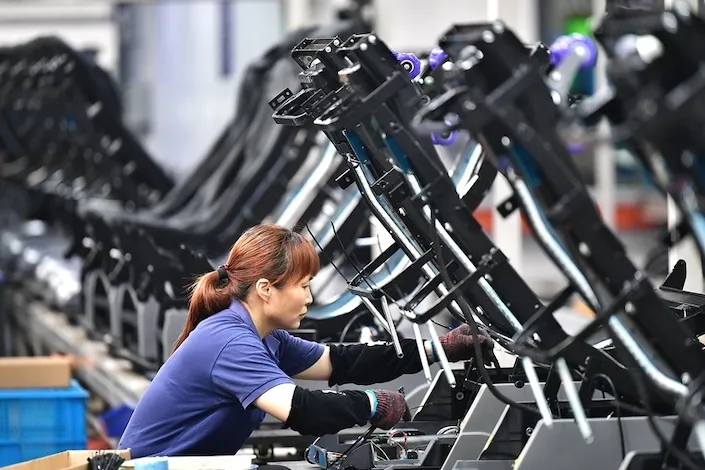
Profits at China's major industrial firms rose 14.4% in September from a year earlier, the fastest pace since June, taking January-September growth to 15.5%, driven by electronics profits that doubled over the nine months.
Profits at China's major industrial firms rose 14.4% in September from a year earlier, according to data released by the National Bureau of Statistics on October 27, accelerating sharply from 4.2% growth in August and marking the fastest monthly pace since June. For the first nine months of 2026, profits rose 15.5%, slightly below the 15.7% recorded for January to August.
The official account attributes the strength to electronics and high-technology manufacturing. Profits in the electronics industry doubled from a year earlier over the first nine months and contributed 9.6 percentage points of the overall increase, according to National Bureau of Statistics statistician Yu Weining. Profits at makers of electronic specialty materials surged 220%, semiconductor discrete device manufacturing rose 51.7%, and high-technology manufacturing as a whole grew 52%, accounting for 25.5% of total profits among major firms, up 6.2 percentage points from a year earlier.
Factory-gate prices also helped. Producer prices rose 5% in September from a year earlier, the fastest pace since 2022, with higher energy and raw material costs linked to the Middle East conflict and stronger demand for artificial intelligence hardware. The data cover major industrial firms with annual main business revenue of at least 20 million yuan, and combined profits for the first nine months reached 6.03 trillion yuan.
The National Bureau of Statistics figures, as reported by Xinhua and corroborated by the Bloomberg account of the same release, agree on the September rate, the August comparison, the nine-month total and the electronics contribution. The Bloomberg account adds a caution that the bureau's own breakdown supports: the rebound is concentrated in a narrow set of energy and AI-linked sectors, while firms that rely on domestic demand continue to struggle with weak consumption and intense price competition.
That concentration is the story beneath the headline. Mining and raw materials also posted strong gains, while downstream manufacturers face higher input costs at a time when domestic demand is soft, and property investment remains weak. A profit surge led by a few sectors does not, on its own, show a broad-based recovery in Chinese industry.
The next readings to watch are October's industrial profits and factory-gate prices, which will show whether the September acceleration was a one-month response to energy prices and AI orders or the start of a wider turn. For now, the official data describe an industrial economy splitting in two: electronics and commodities earning strongly, and consumer-facing manufacturers still waiting for demand to return.