
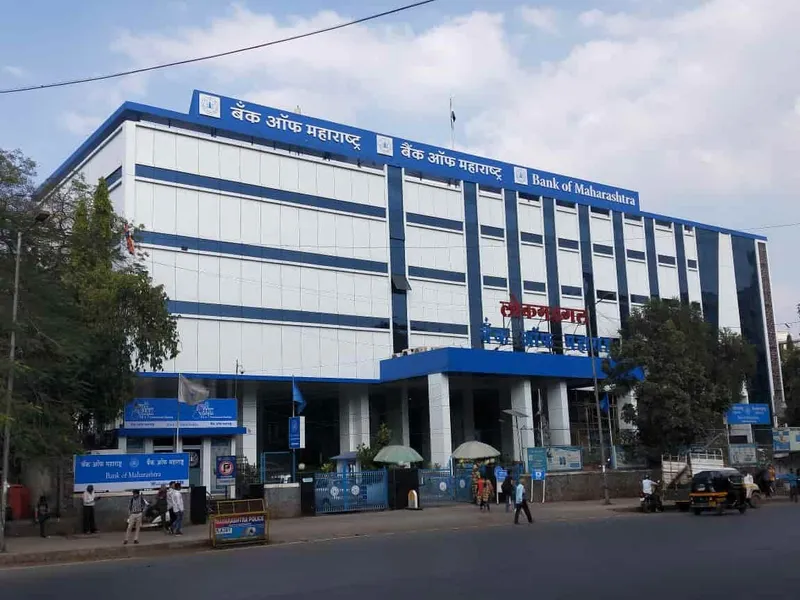
Bank of Maharashtra reported a 41% year-on-year rise in second-quarter net profit to 2,310 crore rupees, its highest in eight quarters, helped by higher net interest income and other income and improving asset quality.
Bank of Maharashtra reported a 41% year-on-year jump in net profit for the second quarter of 2026-27, to 2,310 crore rupees, its highest in eight quarters, the bank's results show.
Net profit rose from 1,633 crore rupees in the same quarter a year earlier. Net interest income, the difference between interest earned and interest paid, rose 22% to 3,954 crore rupees from 3,248 crore rupees, and other income rose 34% to 1,129 crore rupees from 845 crore rupees. The net interest margin improved to 3.97% from 3.85% a year earlier.
Asset quality improved over the year. Gross non-performing assets fell to 1.25% of gross advances at the end of September 2026, from 1.72% a year earlier, and net non-performing assets eased to 0.12% of net advances from 0.18%. Total deposits grew 21.5% to 3,76,407 crore rupees, although the share of low-cost current and savings deposits slipped to 46.47% of domestic deposits from 50.35%.
The headline profit figure is reported consistently in two places: The Hindu BusinessLine puts net profit at 2,310 crore rupees, up 41%, and a live results blog gives the precise figure as 2,309.59 crore rupees, up 41.42%, with net interest income up 22% to 3,954.4 crore rupees, matching the rounded figures. Managing director Nidhu Saxena attributed a rise in provisioning for standard and restructured assets, to 603 crore rupees from 158 crore rupees, to a 500 crore rupee additional provision made to comply with expected credit loss norms.
The quarter leaves the Pune-headquartered public-sector lender with profit growth driven by lending income and fee-related income rather than by a release of provisions, while its bad-loan ratios moved in the right direction. The open question for coming quarters is the deposit mix: total deposits grew strongly, but the falling share of low-cost deposits means the bank paid more, on average, for the money it lent.