
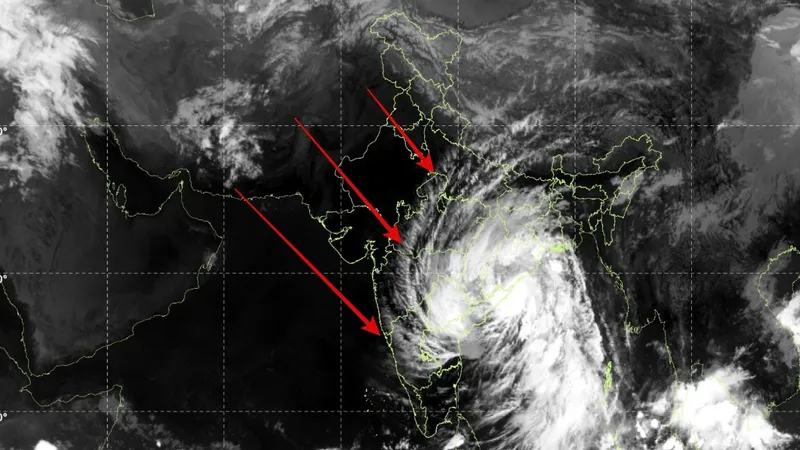
Cyclone Arnab completed crossing the Andhra Pradesh and Yanam coasts on Wednesday morning and weakened from a very severe to a severe cyclonic storm, after more than 180,000 people were evacuated and with no loss of life reported.
Very severe cyclone Arnab completed crossing the Andhra Pradesh and Yanam coasts between 2 a.m. and 8 a.m. local time on Wednesday and weakened into a severe cyclonic storm, India's weather office said, with the system moving entirely over land.
At 8:30 a.m. local time the centre of the storm lay about 20 km east-northeast of Narsapur, 40 km southwest of Yanam and 60 km southwest of Kakinada, with maximum sustained winds of 125 to 135 km per hour gusting to 150 km per hour.
More than 180,000 people were evacuated across Andhra Pradesh and Odisha before landfall, and no loss of life was reported in either state. Trees and electricity poles were uprooted, power supplies were disrupted and crops were damaged, with the Godavari districts worst affected, low-lying areas of Konaseema inundated and nearly 6,000 electricity poles reported down in Konaseema alone. Operations at three Andhra Pradesh airports were suspended.
The crossing and the weakening are confirmed by the India Meteorological Department's bulletin as carried by The Hindu BusinessLine, and Reuters independently reported the evacuation figure and the absence of reported deaths. The two accounts differ on storm surge height, with 1.5 to 2.5 metres in the weather office wording carried by BusinessLine against 1 to 1.5 metres in the Reuters account, and that difference is left open here rather than resolved.
Red alerts for extremely heavy rainfall remain in place for Anakapalli, Alluri Sitharama Raju, Kakinada, Konaseema, East Godavari and West Godavari districts. Nepal has suspended issuing high-mountain trekking permits for three days over rain and blizzard risk linked to the system, and attention now turns to damage surveys and power restoration in the affected districts as the storm moves further inland.