
- Environment
- Breaking

COP31 presidency tables compromise text and says a deal is close as fossil-fuel dispute drags on
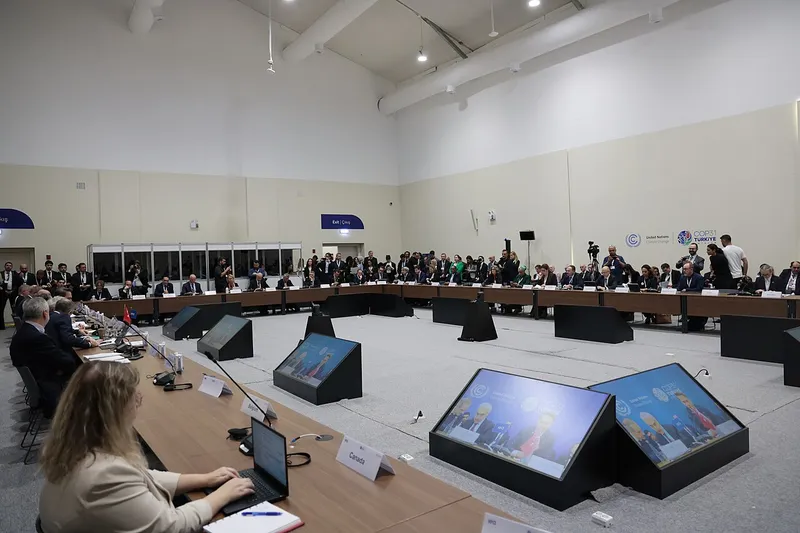
The COP31 presidency has tabled a proposed final agreement in Antalya that still omits any mention of fossil fuels, saying it believes the text is one all parties can accept, with delegates given until 0300 GMT to object before an approval session at 0600 GMT.
Story So Far
What happened
In the early hours of Sunday, the COP31 presidency tabled a proposed final agreement in Antalya, telling delegates it believed the text was one all parties could accept, after talks ran more than a day past their scheduled Friday close. President Murat Kurum told a late-night plenary that the presidency had sent the package to the secretariat and would reconvene on Sunday morning to approve it, with delegates given until 0300 GMT to raise objections and an approval session set for 0600 GMT.
Why it matters
The text decides whether the summit ends with a deal at all, and what it says about the fuels driving global warming. Nearly 200 countries have spent two weeks arguing over whether the final agreement should name coal, oil and gas, and over how much richer nations should pay to help poorer ones adapt to a hotter climate.
What we know
The 10-page draft contains no mention of fossil fuels, oil, coal or a phase-out, according to the Associated Press, which reviewed the text. It recalls the COP28 agreement in Dubai in full rather than setting a new timetable for moving away from fossil fuels. It does set a goal of raising electricity's share of total final energy use to 35 percent by 2035, from about 21 percent now, and backs carbon capture and storage at a scale of one billion metric tons. An earlier draft's target of 120 billion dollars a year in adaptation finance by 2035 was dropped; the new text instead calls for at least tripling adaptation finance by 2035 and asks for a technical report on how that increase would be measured.
What remains unclear
Whether the text survives the plenary. Panama's environment minister, Juan Carlos Navarro, has said his country would formally object to any deal without fossil-fuel language, and climate decisions are generally taken by consensus, so a single formal objection can block adoption. The European Union's climate commissioner, Wopke Hoekstra, has said he would rather see no deal than a weak one, and France has also rejected the draft.
What's next
Delegates have until 0300 GMT on Sunday to lodge objections, and the presidency has scheduled a session at 0600 GMT to begin approving the text. Organisers have warned that delegates leaving Antalya could leave the conference without the two-thirds quorum needed to pass it.
Our perspective
The draft trades the summit's most contested words for targets on electrification and carbon capture, a compromise that keeps a deal alive while leaving the central dispute over fossil fuels unresolved.
How we know?
The presidency's account comes from Kurum's own remarks to the plenary, reported by Reuters, and the contents of the draft come from the Associated Press, which read the 10-page text. The dropped 120-billion-dollar adaptation target was documented by Reuters and Carbon Brief in earlier drafts, and the objections from Panama, France and the European Union were reported by UN News and Reuters.
Original reporting
Independent corroboration
Verification notes
- Reported: Kurum's statement that the text is one all parties can accept is reported by Reuters and has not been independently confirmed.
- Reported: The draft's contents, including the absence of fossil-fuel language and the 35 percent electrification goal, are reported by the Associated Press after it reviewed the text.
- Unconfirmed: Whether the text will be adopted at the 0600 GMT session is not yet known.
Keywords
Tags
- Environment
- Climate
- COP31
- Turkey
- UN