
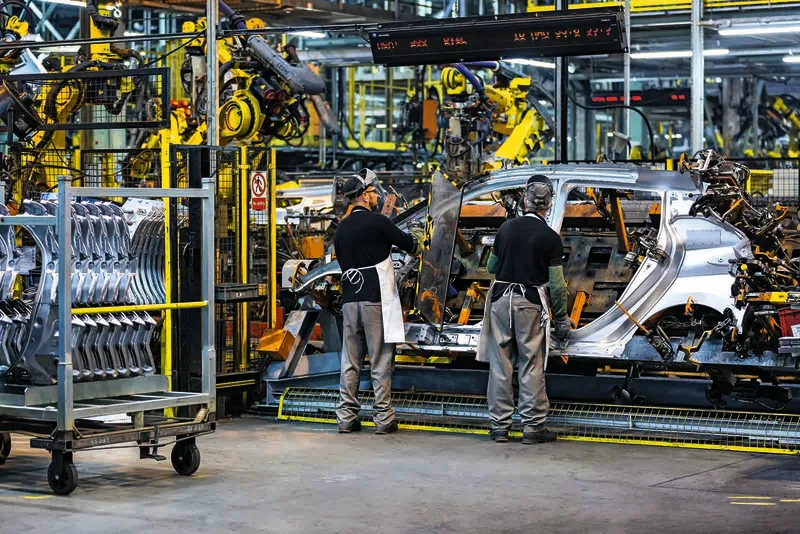
Britain built 74,031 vehicles in September, up 36.3 percent year on year, the Society of Motor Manufacturers and Traders said, though output for the first nine months of the year remains 3 percent lower.
Britain's vehicle production rose sharply in September, industry data showed on Thursday, rebounding from a comparison period hit by a cyber incident at the country's largest automotive employer last year.
UK vehicle output increased 36.3 percent to 74,031 units in September, the strongest growth since August 2022, the Society of Motor Manufacturers and Traders (SMMT) said. Car production climbed 38.6 percent to 70,831 units, the strongest September for UK car manufacturing since 2023. The European Union remained the largest destination, taking 57.5 percent of car shipments, with exports up 12.7 percent year on year, while shipments to the United States rose 234.8 percent and exports to China increased 357.7 percent, though from a low base.
The figures come from the SMMT's monthly production data as reported by Reuters, and the industry body itself attributes the scale of the rebound to last year's disruption: the September comparison was depressed by a cyber incident, so the growth rate overstates the underlying recovery. Total UK car and commercial vehicle production in the first nine months of the year fell 3 percent year on year to 564,537 units.
SMMT chief executive Mike Hawes said September's rebound was welcome, but that the comparison with last year's disruption masked the pressures on UK manufacturing, adding that mandate targets were running ahead of demand and draining resources required for British factories and jobs. The industry body reiterated concerns over the European Union's proposed Made in EU measures and tougher post-Brexit rules of origin due to take effect from 2027, alongside pressure from Britain's electric-vehicle sales mandate.
An independent forecast cited by the SMMT expects UK light vehicle production to fall 2.3 percent to 731,000 units this year before recovering to 752,000 units in 2027 as new models, mostly electric vehicles, enter production. The September rebound therefore reads as a recovery in monthly output rather than a turnaround in the full-year trend, and the next data points will show whether export growth to Europe, the United States and China can offset the weaker nine-month total.