
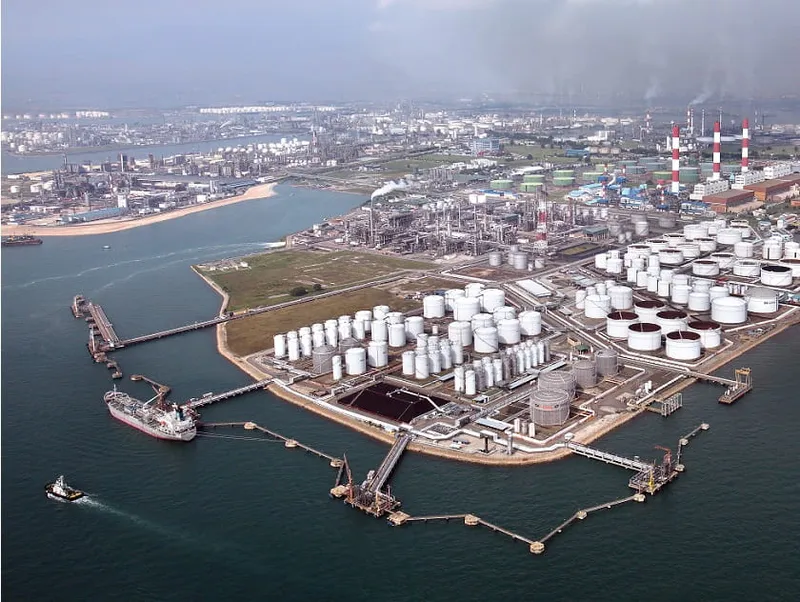
Saudi Arabia and Singapore announced a joint intent for Saudi crude oil to be stored at the Jurong Rock Caverns from the second half of 2027, with Saudi Aramco set to sign a memorandum of understanding with Singapore's Energy Market Authority and JTC Corporation.
Saudi Arabia plans to store crude oil at Singapore's Jurong Rock Caverns from the second half of 2027, energy ministers from both countries said on Monday at the Singapore International Energy Week conference. Singapore's energy minister Tan See Leng announced the joint intent, saying the arrangement enhances the resilience of the Saudi crude supply chain in South-east Asia and contributes to Singapore's energy security if supplies are disrupted.
Saudi Aramco will sign a memorandum of understanding with Singapore's Energy Market Authority and JTC Corporation on Monday, and the two sides aim to conclude negotiations within a few months. The caverns sit 150 metres below ground on Jurong Island and can store up to 1.47 million cubic metres, roughly 9 million barrels, of liquid hydrocarbons such as crude oil and condensate. Saudi energy minister Prince Abdulaziz bin Salman said in a video recording at the conference that bringing supply closer to key Asian markets would strengthen the flexibility of the Saudi supply network.
Singapore becomes the third Asian country to store Saudi crude, after Japan and South Korea. Aramco's crude storage capacity in Okinawa was expanded to 8.2 million barrels in September 2017, and a 2023 deal stored 5.3 million barrels in South Korea's reserve facilities at Ulsan for five years. Reuters reported that the move follows severe disruption to energy supplies shipped through the Strait of Hormuz during the US-Israeli war with Iran, which prompted countries to draw down inventories, and that Asia imported two-thirds of its oil from the Middle East before that war.
The start window, the memorandum parties and the cavern capacity are reported consistently by Reuters and Bloomberg. What has not happened yet is a concluded deal: the memorandum is a step toward an arrangement, with negotiations still to finish over the coming months, so storage from the second half of 2027 is an announced plan rather than a completed agreement. The ministers' statements are quoted from the conference, not from a published contract.
The deal matters because stockpiles are the buffer between a supply shock and a fuel shortage. Most Asian countries outside China, Japan and South Korea hold smaller buffers, and the Hormuz disruption showed how quickly inventories can be drawn down. Japan is separately in talks with Asian countries to boost crude reserves under an initiative proposed earlier this year with $10 billion in financial support. The next milestone for the Singapore arrangement is the conclusion of negotiations in the coming months.