
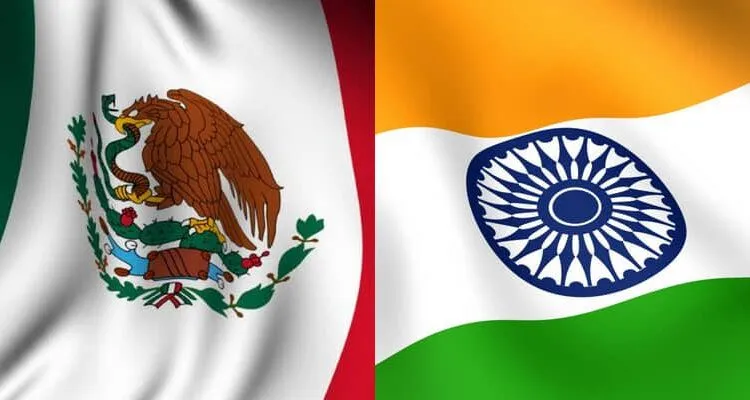
India and Mexico signed terms of reference on October 28 formally launching negotiations for a preferential trade agreement covering goods market access, rules of origin, customs facilitation and trade remedies.
India and Mexico signed terms of reference on October 28 formally launching negotiations for a preferential trade agreement, India's commerce ministry said. The document sets out the framework, scope, modalities and roadmap for talks aimed at expanding bilateral trade, creating business opportunities, enhancing investment flows and building more resilient supply chains.
The talks were launched during a visit to Mexico by India's Commerce Secretary, Rajesh Agrawal, who discussed bilateral trade with Mexico's Undersecretary of Foreign Trade, Luis Rosendo Gutiérrez Romano, acting on behalf of Economy Secretary Marcelo Ebrard Casaubon. The terms cover market access for goods, rules of origin, customs procedures and trade facilitation, dispute settlement, sanitary and phytosanitary measures, technical barriers to trade and trade remedies.
The initiative follows an understanding reached between Indian Prime Minister Narendra Modi and Mexican President Claudia Sheinbaum on the sidelines of the G7 summit in Canada in June 2025, when the two leaders agreed to deepen the India-Mexico partnership. Sectors identified as promising for expanded cooperation include automobiles, chemicals, electronics, pharmaceuticals, agri-food products, energy, critical minerals, medical devices and advanced manufacturing.
India's Press Information Bureau release confirms the signing and the negotiating framework, but it is a framework for talks, not an agreement itself: no tariff cuts or market-access concessions have been announced. Official trade data reported alongside the announcement put India's merchandise exports to Mexico at $5.73 billion in 2025-26, with automobiles the largest share at $1.92 billion, and noted that some Indian exports face tariffs of up to 50 percent under Mexico's new tariff regime.
The stakes for exporters are practical rather than symbolic. A preferential agreement would matter most if it changes the tariff treatment of the goods India already sells to Mexico, above all automobiles, and gives Mexican firms clearer access to India's consumer and industrial markets. Without commercially meaningful concessions, the framework would add process without changing trade flows.
Negotiations will now proceed under the roadmap in the terms of reference, with the scope of the first substantive rounds still to be set out by the two commerce teams.