
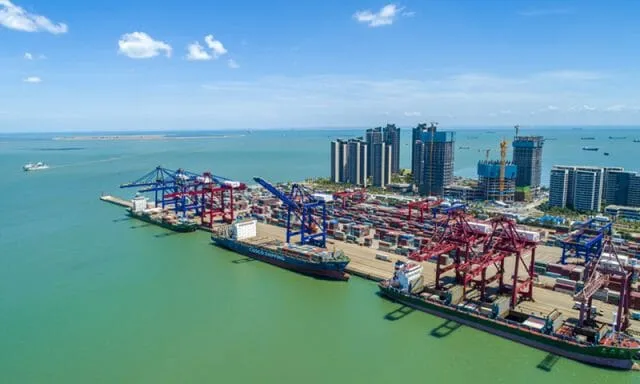
China has published 16 measures to make it easier for foreign businesses and professionals to operate in the Hainan Free Trade Port, covering medical services, energy trade and bonded business.
China has unveiled 16 measures to make it easier for foreign businesses and professionals to operate in the Hainan Free Trade Port, the world's largest free trade port by area, under a government circular made public on Thursday. The measures cover energy trade, medical services and bonded business operations, and were jointly issued by the Ministry of Commerce, the National Development and Reform Commission, the Ministry of Ecology and Environment and the General Administration of Customs.
Foreign physicians legally licensed to practise overseas may obtain permits to provide clinical diagnosis and treatment services in Hainan for up to three years, with extensions available under the regulations. More convenient policies for work permits and for stay and residence will also be introduced for foreign nationals, and overseas companies will be allowed to use bonded facilities at Hainan's liquefied natural gas receiving terminals.
The port will also be supported in conducting liquefied natural gas futures delivery warehouse operations once liquefied natural gas futures contracts are launched. Other measures promote offshore trade, expand the range of products eligible for bonded maintenance, allow eligible bonded remanufactured products into pilot free trade zones on the mainland, encourage the use of the yuan in new forms of barter trade, and deepen economic and trade cooperation with Hong Kong.
The measures are reported from the circular itself via Xinhua, which is China's state news agency, so the description of what the measures say is well sourced while their practical effect is not yet demonstrated: no implementation results, application numbers or foreign business response are reported in the circular summary. The background is established: Hainan launched island-wide special customs operations in December 2025, allowing freer entry of overseas goods and expanded zero-tariff coverage.
Hainan matters to Beijing's opening-up strategy because it is the test case for a whole island operating under free trade port rules, and the new measures extend that experiment from goods into services and people, notably medical professionals. Whether foreign firms use the new routes will depend on the detailed rules that follow the circular, which have not yet been published.
The next step to watch is the publication of those implementing rules and the first permits issued under the three-year medical provision, which will show whether the measures change anything on the ground.